

TL;DR: Opening a KFC franchise in India requires a total investment of ₹1.5 to ₹2.5 crore, including a franchise fee of ₹36-40 lakhs. However, here’s the catch — KFC doesn’t directly franchise to individual entrepreneurs in India. The brand operates through master franchisees like Sapphire Foods India Limited and Devyani International. You’d need a minimum net worth of ₹10 crore and ₹5 crore in liquid capital to even be considered.
I’ve been researching franchise opportunities in India for a while now, and KFC is one of the most searched franchise options — for good reason. It’s a global brand with massive recognition, and the fast-food market in India is growing at roughly 15-18% year-on-year.
But here’s the thing most articles won’t tell you upfront: getting a KFC franchise is not as simple as filling out a form and writing a check. The process is far more selective and capital-intensive than what most people expect.
In this guide, I’ll break down the actual costs, the franchise models KFC uses in India, the profit potential, and — most importantly — whether it’s even realistic for you to pursue this opportunity in 2026.
* * *
KFC in India — A Quick Overview
KFC (Kentucky Fried Chicken) entered India in 1995, opening its first outlet in Bangalore. Fast forward to 2026, and the brand now operates 500+ outlets across 100+ cities in India, making it one of the largest QSR (Quick Service Restaurant) chains in the country.
Here are some quick facts about KFC India:
| Detail | Information |
|---|---|
| Founded | 1930 by Colonel Harland Sanders (USA) |
| Parent Company | Yum! Brands (also owns Pizza Hut, Taco Bell) |
| India Entry | 1995 (first outlet in Bangalore) |
| Outlets in India | 500+ across 100+ cities |
| India Operators | Sapphire Foods, Devyani International |
| Average Ticket Size | ₹350-500 per customer |
| India Revenue (FY2025) | ₹2,800+ crore (combined operators) |
KFC is operated in India by two primary master franchisees — Sapphire Foods India Limited (which operates KFC, Pizza Hut, and Taco Bell outlets across South and East India, Sri Lanka, and the Maldives) and Devyani International (which handles North and West India).
This is important to understand because it directly affects how the franchise model works. More on that below.
* * *
Can You Actually Get a KFC Franchise in India?
Let me be completely honest here — this is where most articles on KFC franchise cost miss the mark.
KFC does not directly offer franchise rights to individual entrepreneurs in India. Unlike brands like Subway or smaller QSR chains where you can directly apply and get a franchise, KFC’s model in India works through master franchise agreements.
⚠️ Important:
As of February 2026, KFC India is not actively offering individual franchise opportunities. The brand operates exclusively through large-scale master franchisees (Sapphire Foods and Devyani International). If you see websites claiming to offer KFC franchise rights for ₹10-15 lakhs, those are likely scams.
Here’s how the two franchise models work:
1. Master Franchise Model (Current) — Yum! Brands grants exclusive territorial rights to large companies like Sapphire Foods and Devyani International. These companies then own and operate hundreds of KFC outlets directly. They hire managers and staff, but they don’t sub-franchise to individuals.
2. Sub-Franchise Model (Rare) — In some cases, master franchisees may partner with local investors to open outlets in specific territories. This is not publicly advertised and typically requires existing relationships with the master franchisee, plus significant capital.
So if you’re wondering “how to open a KFC franchise in India” — the realistic path is either to invest in Sapphire Foods or Devyani International stock (both are publicly listed companies), or to approach them directly with a proposal for a specific market where KFC doesn’t have presence yet.
If you’re looking for food franchise opportunities that are more accessible to individual investors, I’d recommend checking out our guides on Domino’s franchise in India and Zudio franchise cost in India — both offer more direct paths.
* * *
KFC Franchise Cost in India — Complete Breakdown
Even though direct individual franchising isn’t currently available, understanding the cost structure is essential — especially if you’re exploring the sub-franchise route or evaluating KFC against other food franchise options.
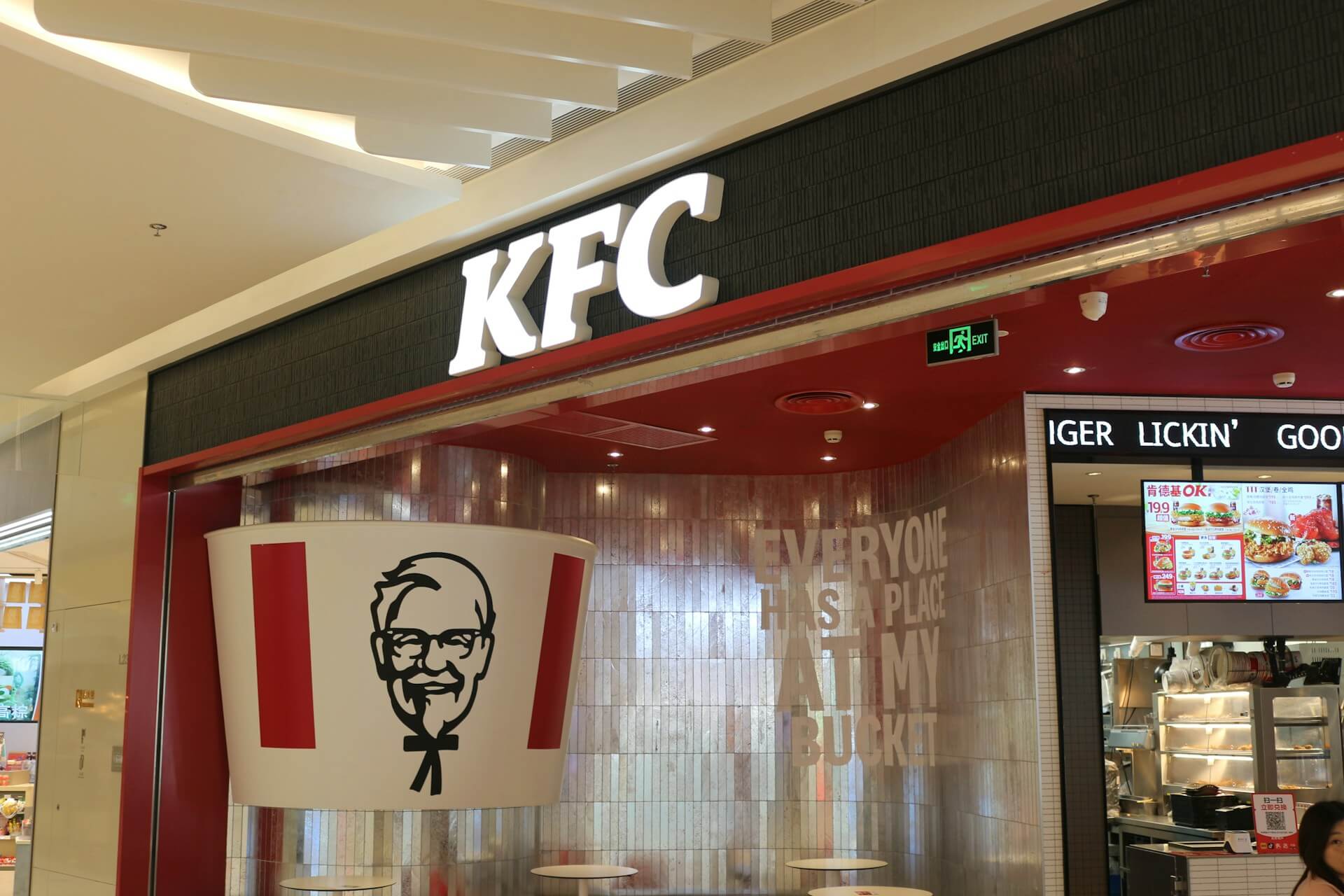
Here’s the detailed cost breakdown for setting up a KFC outlet in India:
| Cost Component | Amount (₹) |
|---|---|
| Franchise Fee | ₹36 lakhs — ₹40 lakhs (one-time) |
| Outlet Setup & Interiors | ₹80 lakhs — ₹1.2 crore |
| Kitchen Equipment | ₹40 lakhs — ₹50 lakhs |
| Initial Inventory & Supplies | ₹15 lakhs — ₹25 lakhs |
| Security Deposit | ₹10 lakhs — ₹15 lakhs |
| Staff Hiring & Training | ₹5 lakhs — ₹10 lakhs |
| Total Investment | ₹1.5 crore — ₹2.5 crore |
On top of the initial investment, here are the recurring costs:
| Recurring Cost | Amount |
|---|---|
| Royalty Fee | 4-5% of gross monthly sales |
| Marketing/Advertising Fee | 2-3% of gross monthly sales |
| Monthly Rent | ₹2 lakhs — ₹8 lakhs (varies by city) |
| Staff Salaries | ₹3 lakhs — ₹6 lakhs/month (15-25 employees) |
| Utilities & Maintenance | ₹50,000 — ₹1.5 lakhs/month |
The costs vary significantly based on your city. A KFC in a tier-1 city like Mumbai or Delhi will cost substantially more than one in a tier-2 city like Lucknow or Jaipur — primarily due to real estate and rental differences.
* * *
Financial Requirements You Must Meet
This is where things get serious. KFC (through Yum! Brands) has strict financial criteria for potential franchise partners. You can’t simply have ₹2 crore in savings and apply.
| Requirement | Minimum Threshold |
|---|---|
| Net Worth | ₹10 crore minimum |
| Liquid Capital | ₹5 crore minimum |
| Restaurant Experience | 5+ years in QSR/food industry preferred |
| Property Size | 1,000 — 1,500 sq ft (dine-in) |
| Location Type | High-traffic: malls, high streets, commercial hubs |
| Agreement Duration | 20 years (renewable) |
The ₹10 crore net worth requirement is what makes KFC franchise out of reach for most individual investors. For comparison, a Domino’s franchise requires roughly ₹50 lakhs to ₹1 crore in total investment, and a Zudio franchise costs even less.
✍️ Author’s Note:
KFC expects franchise partners to have deep QSR experience and a team capable of managing multiple outlets simultaneously. Single-outlet operators are rarely considered. If you’re an individual investor with ₹1-2 crore to invest, a KFC franchise isn’t realistic — look at brands like Subway, Domino’s, or Chaayos instead.
* * *
KFC Franchise Profit and ROI — What to Expect
Now let’s talk about the money-making side. If you do manage to secure a KFC franchise partnership, here’s what the numbers look like:
| Revenue Metric | Estimated Range |
|---|---|
| Monthly Sales | ₹8 lakhs — ₹20 lakhs |
| Annual Revenue (Per Outlet) | ₹1 crore — ₹2.5 crore |
| Net Profit Margin | 7% — 12% |
| Monthly Net Profit | ₹56,000 — ₹2.4 lakhs |
| Break-Even Period | 3 — 5 years |
| ROI (Annual) | 15% — 25% (after break-even) |
A few things to note here. The 7-12% net profit margin is typical for QSR franchises in India. It’s not jaw-dropping, but KFC’s brand strength means you get consistent footfall and lower marketing costs compared to running an independent restaurant.
The real money in KFC franchising comes from operating multiple outlets. That’s exactly why Yum! Brands prefers large operators — a single outlet’s profit margin is thin, but 10-20 outlets create a serious business.
For reference, Sapphire Foods India (listed on NSE/BSE) reported consolidated revenue of over ₹2,800 crore in FY2025, with KFC being their primary revenue driver. So the brand clearly generates revenue — the question is whether the margins justify the massive capital requirement for individual investors.
* * *
How to Apply for a KFC Franchise in India
If you still want to pursue a KFC franchise after understanding the capital requirements, here’s the step-by-step application process:
Step 1: Visit the Official Yum! Brands Franchise Page
Head to the official KFC franchise page on the Yum! Brands website. Look for the “Franchise Application” button.

Step 2: Fill in Your Business Details
The application form asks for your personal information, business experience, years of industry experience, financial background, and the proposed franchise location.
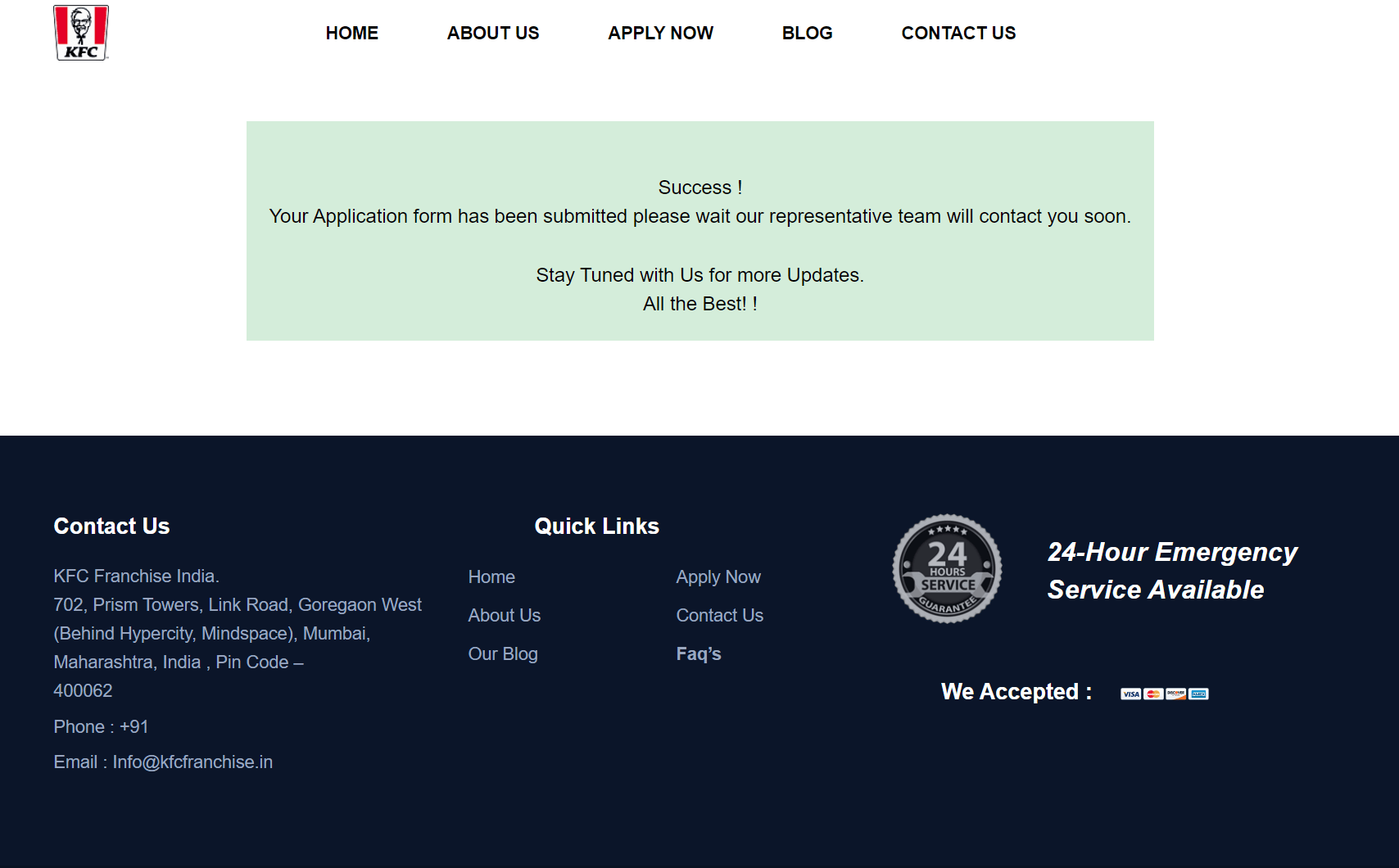
Step 3: Wait for KFC’s Response
After submitting, a KFC/Yum! Brands representative will review your application. If your profile meets their criteria, they’ll reach out for further discussion. This process can take several weeks to months.
Step 4: Due Diligence and Agreement
If shortlisted, KFC conducts background checks, financial verification, and site assessments. Upon approval, you’ll sign a 20-year franchise agreement and begin the outlet setup process.
Step 5: Training and Launch
KFC provides comprehensive training covering operations, food preparation, quality standards, customer service, and inventory management. The training typically takes 12-16 weeks before your outlet opens.
Something to Note: KFC does not offer franchise rights on individual request. The company partners with large-scale operators through a thorough vetting process. Filling the application form alone does not guarantee a franchise — it’s the first step in a lengthy evaluation.
* * *
Documents and Licenses Required
If you reach the approval stage, you’ll need these documents and licenses ready before you can start operations:
| Document/License | Purpose | Issuing Authority |
|---|---|---|
| FSSAI License | Food safety and hygiene compliance | Food Safety and Standards Authority of India |
| GST Registration | Tax compliance | Central/State GST Department |
| Trade License | Permission to operate business | Local Municipal Corporation |
| Health & Safety Permit | Hygiene and safety standards | Local Health Department |
| Fire Safety Certificate | Fire prevention compliance | Fire Department |
| Signage Approval | Permission for brand signage | Municipal Corporation |
| Shop & Establishment License | Labor law compliance | State Labor Department |
| Lease/Rental Agreement | Property documentation | Property owner |
| Insurance | Business and liability coverage | Insurance provider |
The FSSAI license is the most critical one — you cannot legally serve food in India without it. The application process for FSSAI can take 30-60 days, so start early.
* * *
KFC vs Other Food Franchises in India — Comparison
To give you a clearer picture of where KFC stands, here’s how it compares with other popular food franchise options in India:
| Factor | KFC | Domino’s | Subway | McDonald’s |
|---|---|---|---|---|
| Total Investment | ₹1.5-2.5 Cr | ₹50L-1 Cr | ₹10-25L | ₹6-14 Cr |
| Franchise Fee | ₹36-40L | ₹5-10L | ₹5-8L | ₹25-45L |
| Royalty Fee | 4-5% | 5.5% | 8% | 4-5% |
| Space Required | 1,000-1,500 sqft | 1,000-1,500 sqft | 300-500 sqft | 2,000-4,000 sqft |
| Break-Even | 3-5 years | 2-3 years | 1.5-3 years | 5-7 years |
| Net Worth Req. | ₹10 Cr | ₹1-2 Cr | ₹30-50L | ₹15 Cr+ |
| Individual Franchise? | No (master only) | Yes | Yes | No (master only) |
| Profit Margin | 7-12% | 10-15% | 15-20% | 8-12% |
As you can see, Subway offers the lowest barrier to entry and the highest profit margins, while KFC and McDonald’s require institutional-level capital. If you’re an individual investor with ₹50 lakhs to ₹1 crore, Domino’s is probably your best bet among these options.
* * *
Frequently Asked Questions
How much does a KFC franchise cost in India in 2026?
The total investment for a KFC franchise in India ranges from ₹1.5 crore to ₹2.5 crore, which includes a franchise fee of ₹36-40 lakhs, outlet setup costs of ₹80 lakhs to ₹1.2 crore, kitchen equipment around ₹50 lakhs, and initial inventory of ₹15-25 lakhs. Additionally, you need a minimum net worth of ₹10 crore.
Is KFC giving franchise in India currently?
No, KFC is not directly offering individual franchise opportunities in India as of 2026. The brand operates through master franchisees — Sapphire Foods India Limited and Devyani International. These large companies own and operate all KFC outlets. Sub-franchise partnerships are rare and not publicly advertised.
What is the profit margin of a KFC franchise in India?
A KFC franchise in India typically generates a net profit margin of 7-12% on monthly sales of ₹8-20 lakhs. This translates to a monthly net profit of approximately ₹56,000 to ₹2.4 lakhs per outlet. The break-even period is usually 3-5 years depending on location and foot traffic.
What is the minimum net worth required for a KFC franchise?
KFC requires a minimum net worth of ₹10 crore and at least ₹5 crore in liquid capital from potential franchise partners. They also prefer applicants with 5+ years of experience in the QSR or food industry. These requirements make KFC one of the most capital-intensive franchise options in India.
Which is better — KFC franchise or Domino’s franchise in India?
For individual investors, Domino’s is more accessible — it requires only ₹50 lakhs to ₹1 crore investment, offers direct franchising, and has a shorter break-even period of 2-3 years. KFC requires ₹1.5-2.5 crore with ₹10 crore net worth and doesn’t franchise to individuals. However, KFC has stronger brand recognition globally.
How long is a KFC franchise agreement?
The standard KFC franchise agreement in India is for 20 years. After the agreement period expires, franchisees can apply for renewal, subject to performance evaluation and compliance with KFC’s operational standards throughout the agreement period.
* * *
Summing Up!
KFC is undoubtedly one of the most recognized food brands in India, and running a KFC outlet can be highly profitable — but it’s not a franchise opportunity meant for individual investors. The ₹10 crore net worth requirement and master franchise model make it a play for established restaurant groups, not first-time entrepreneurs.
If you have the financial muscle and QSR experience, reaching out to Sapphire Foods or Devyani International about sub-franchise opportunities in underserved markets could be worth exploring. But if you’re starting out with ₹50 lakhs to ₹2 crore, you’re better off looking at Domino’s, Subway, or other QSR brands that welcome individual operators.
Whatever you decide, do your homework, verify numbers directly with the franchisor, and never send money to “agents” claiming to secure KFC franchise rights. Stick to official channels only.
Disclaimer:
While writing this article, we conducted extensive research using publicly available data. The investment, ROI, and expected returns may vary based on location and updates related to KFC.
If you find any incorrect information on this page, please let us know at hello@theguidex.com.



