

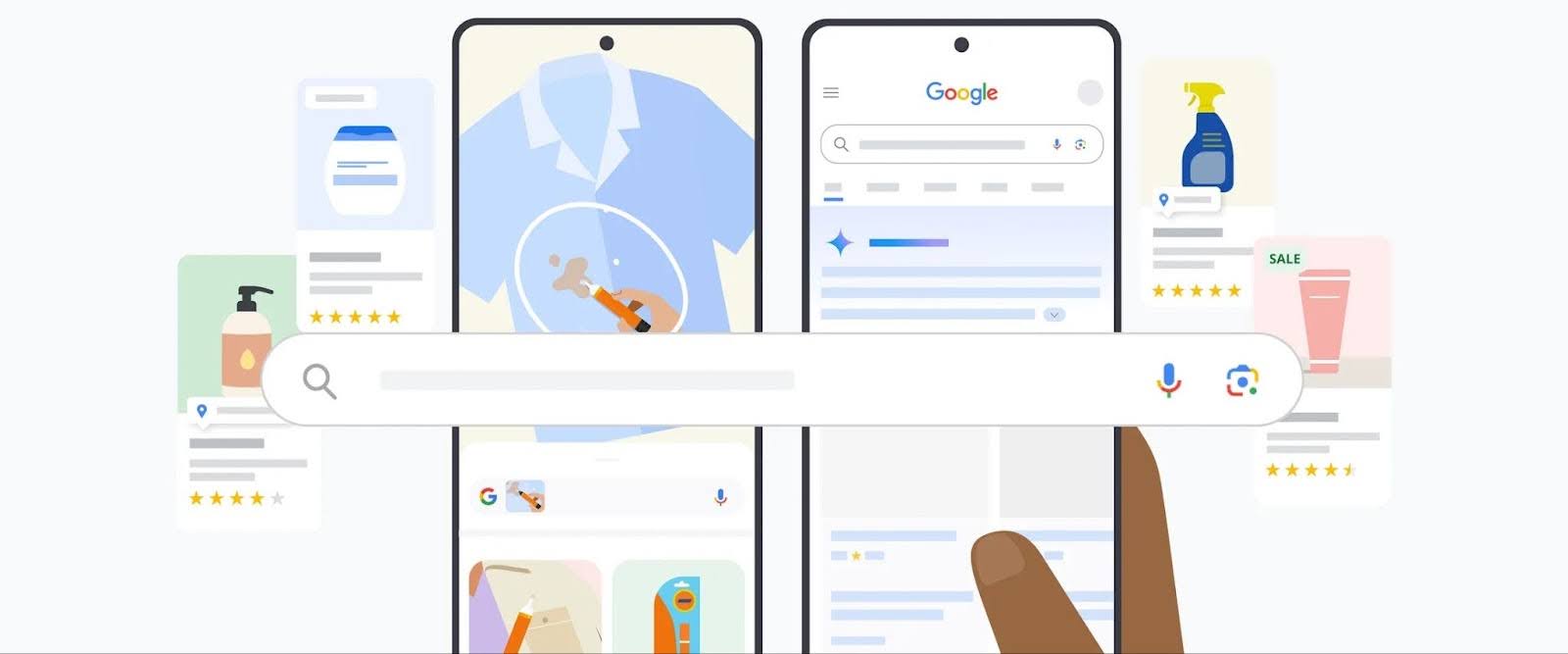
TL;DR: Google’s AI Overview ads now appear on 25%+ of AI-powered search results — up 394% since March 2025. Your existing Search, Shopping, and Performance Max campaigns are automatically eligible if you use broad match or AI Max. Brands cited in AI Overviews see 35% more organic clicks and 91% more paid clicks.
Here’s exactly how to capture this traffic in 2026.
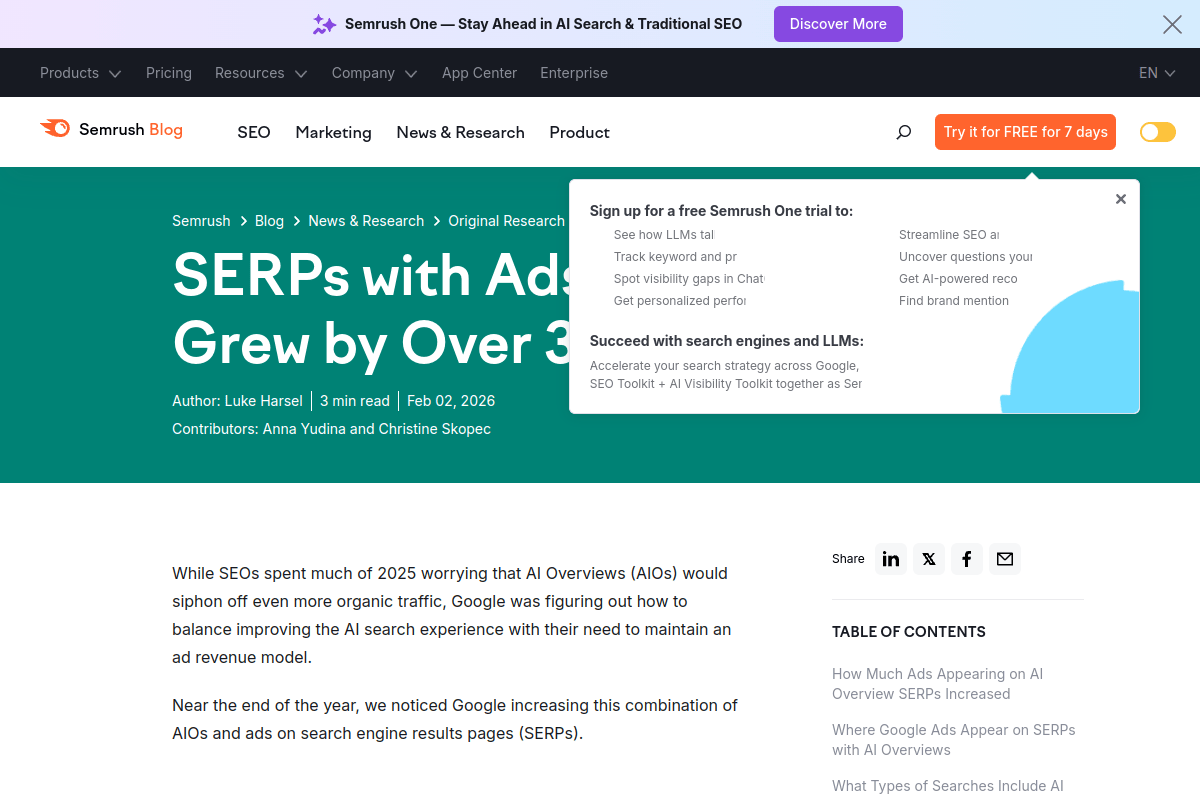
Here’s a number that should stop every marketer mid-scroll: as of October 2025, Google Ads appeared on 25.56% of all SERPs with AI Overviews — up from just 5.17% in March 2025. That’s a 394% increase in 8 months, according to Semrush.
But most advertisers still think AI Overviews are killing their campaigns. They’re wrong. Google didn’t replace your search ads — they built a second floor where you can capture traffic that traditional keyword targeting has always missed.
At my agency Tenet, I’ve tracked this shift across 50+ client accounts since the initial rollout. The advertisers winning right now aren’t the ones with the biggest budgets. They’re the ones who understood this opportunity early and restructured their campaigns for it.
What Are Google AI Overview Ads?
AI Overview ads are placements that appear above, below, or within Google’s AI-generated answers. When someone asks a complex question like “best way to consolidate $30k in credit card debt while keeping my credit score,” Google generates an AI response — and your ads can show alongside it.
According to Google’s official documentation, existing text, shopping, local, and app ads in your Search, Shopping, Performance Max, and App campaigns are eligible. No separate campaign type needed.
As of February 2026, AI Overview ads are live in 12 countries — the US, India, Australia, Canada, Indonesia, Kenya, Malaysia, New Zealand, Nigeria, Pakistan, Philippines, and Singapore — on both mobile and desktop.
Why This Is a Real Second Chance (The Data)
The numbers tell a clear story. AI Overviews are shifting which types of queries show ads — and that creates a massive opening.
In January 2025, 91.3% of AI Overview queries were purely informational. By October 2025, that dropped to 57.1%. The remaining 42.9% were commercial, transactional, or navigational — the queries that actually convert. (Semrush, 10M keyword study)
Meanwhile, Seer Interactive’s September 2025 study found that brands cited in AI Overviews earn 35% more organic clicks and 91% more paid clicks compared to brands that aren’t. Users engaging with AI Overviews also spend 2.7x longer examining results and show 89% higher purchase intent signals.
The long-tail opportunity is especially massive. WordStream’s research confirms that queries with 8+ words are 7x more likely to trigger an AI Overview. These conversational searches — the ones your exact-match keywords have never reached — now have ad placements.
How Do You Get Your Ads Into AI Overviews?
The eligibility requirements are straightforward, but most accounts aren’t fully set up for them. Here’s what Google requires:
- Campaign type: Search, Shopping, Performance Max, or App campaigns
- Targeting: Broad match keywords on Search, or keywordless targeting via Performance Max, Shopping, or AI Max
- Language: English
- Country: One of the 12 eligible countries listed above
Exact match and phrase match campaigns do not qualify for AI Overview placements. If your account runs mostly exact match, you’re invisible in this new inventory. The recommended allocation for 2026 is 60% broad match, 30% exact match, and 10% phrase match — with Smart Bidding controlling spend.
Restricted verticals: Google does not show AI Overview ads for adult, alcohol, gambling, finance, healthcare, or politics queries. If you’re in these spaces, this channel isn’t available yet.
AI Max for Search: The Biggest Update Since Performance Max
Announced at Google Marketing Live in May 2025 and rolled out globally through Q3 2025, AI Max for Search applies AI to three core elements of your existing Search campaigns: search term targeting, ad copy creation, and landing page selection.
The results, according to Google’s internal data:
- Non-retail brands see a 14% increase in conversions at similar CPA/ROAS
- Campaigns with primarily exact/phrase match keywords see up to 27% conversion lift
- Smart Bidding Exploration delivers an 18% increase in unique converting search categories and 19% more total conversions
By Q4 2025, hundreds of thousands of advertisers had adopted AI Max, unlocking billions of net-new queries. Gemini generated nearly 70 million creative assets in AI Max and Performance Max during Q4 alone.
AI Max isn’t a new campaign type — it’s a feature you enable on existing Search campaigns. If you’re running Search campaigns without it, you’re leaving conversions on the table. If you’re looking at broader SEO best practices for 2026, pairing organic strategy with AI Max on the paid side creates a powerful combination.
Google AI Mode: Where Search Is Heading Next
AI Mode is Google’s fully conversational search interface — think ChatGPT-style conversations, but integrated directly into Google Search. As of February 2026, it has 75 million+ daily active users across 180+ countries.
Google is already monetizing this. At NRF 2026 in January, they announced Direct Offers — personalized, merchant-funded deals served directly within AI Mode responses. And in February 2026, shopping ads launched inside AI Mode as contextualized product carousels alongside AI answers.
The Universal Commerce Protocol (UCP), announced January 2026, takes this even further. Partners including Shopify, Etsy, Wayfair, Target, Walmart, Mastercard, and Visa are building toward a future where users can complete purchases directly on Google AI surfaces without visiting your site.
For advertisers, the implication is clear: Google’s ad inventory is expanding into conversational search. Early positioning in AI Mode — which runs on the same Performance Max and Shopping campaigns — could be worth significantly more as adoption grows. This evolution is closely tied to the timeless SEO principles reshaping AI-powered marketing.
Your Updated 90-Day Action Plan for 2026
Days 1-30: Audit and Restructure
- Check AI Overview eligibility. Open each Search campaign and verify you’re using broad match keywords with Smart Bidding. Switch exact-match-heavy campaigns to the 60/30/10 allocation.
- Enable AI Max. Turn it on for your top 3-5 Search campaigns. Use the built-in 50/50 experiment feature to measure incremental lift over 4-6 weeks.
- Audit your Performance Max campaigns. You now have up to 10,000 negative keywords per campaign and shared negative keyword lists. Clean up wasted spend immediately.
- Update your Google Merchant Center feed. Add lifestyle images, not just white-background product shots. Use Asset Studio to generate contextual imagery.
Days 31-60: Optimize for AI Context
- Rewrite ad copy for helpfulness. Replace aggressive CTAs like “Buy Now – 50% Off” with contextual language like “See your personalized options” or “Compare solutions for your business.” AI Overview ads appear alongside educational content — your copy should complement it, not interrupt.
- Optimize landing pages. Google’s AI reads your landing page to determine ad relevance. Start every section with a 1-2 sentence direct answer to a user question. Add structured data that helps you get featured in AI answers — FAQ, Product, and Review schema.
- Review search term reports for AI-driven queries. AI Max and broad match will surface long-tail, conversational queries you’ve never seen before. Identify patterns and create supporting content.
Days 61-90: Scale and Measure
- Evaluate AI Max experiments. After 6 weeks of data, compare conversion volume, CPA, and ROAS between AI Max-enabled and control campaigns. Most advertisers see 14-27% lift.
- Expand to all eligible campaigns. Roll out broad match + AI Max to remaining Search campaigns based on experiment results.
- Prepare for AI Mode ads. Ensure your Shopping and PMax campaigns are healthy — these will be automatically eligible as Google expands AI Mode monetization through 2026.
- Build organic + paid synergy. Brands cited in AI Overviews organically see a halo effect on paid performance. Invest in content that earns citations — combining SEO with paid campaigns boosts overall performance.
Three Mistakes That Will Cost You
1. Sticking to exact match only. If you’re running 100% exact match campaigns, you have zero AI Overview ad eligibility. Broad match with Smart Bidding is the minimum requirement. The 60/30/10 split gives you coverage without losing control.
2. Ignoring landing page quality. Google’s AI evaluates your landing page when deciding whether to serve your ad in an AI Overview. Thin pages with aggressive sales copy won’t make the cut. Your post-click experience is now a primary factor in Ad Rank for these placements.
3. Treating AI Overview ads as a separate channel. They’re not. They run on the same campaigns, same budgets, same bidding strategies. The advertisers failing are the ones who try to create separate “AI campaigns” instead of optimizing their existing structure.
Frequently Asked Questions
Do I need a separate campaign for AI Overview ads?
No. Your existing Search, Shopping, Performance Max, and App campaigns are automatically eligible if you use broad match or keywordless targeting. There’s no separate campaign type or opt-in required.
Will AI Overview ads cannibalize my regular search ads?
No. SE Ranking’s research found that 86.49% of SERPs with AI Overviews showed no ads inside the AI box — traditional placements remained untouched. AI Overview ads create additional inventory, not replacement inventory.
What is AI Max for Search and should I use it?
AI Max is a feature you enable on existing Search campaigns. It uses AI to expand your targeting, generate ad copy, and select landing pages — delivering 14-27% more conversions at similar cost. It’s available in open beta and recommended for any advertiser with 50+ monthly conversions.
Are AI Overview ads available outside the US?
Yes. As of late 2025, AI Overview ads are live in 12 countries including the US, India, Australia, Canada, Indonesia, Kenya, Malaysia, New Zealand, Nigeria, Pakistan, Philippines, and Singapore — in English on both mobile and desktop.
What about Google AI Mode? Should I worry about it?
Embrace it, don’t worry about it. AI Mode has 75 million+ daily users and Google is rolling out shopping ads and Direct Offers within it. Your Performance Max and Shopping campaigns will be automatically eligible as this scales through 2026.
Summing Up!
Google’s AI-powered search isn’t replacing your advertising — it’s creating a parallel universe of ad inventory that rewards broad match, quality landing pages, and helpful ad copy. The 394% growth in AI Overview ad placements over 8 months shows this isn’t an experiment anymore. It’s the new reality.
Start with the 90-day plan above. Enable AI Max on your top campaigns, shift to the 60/30/10 match type allocation, and optimize your landing pages for AI context. The advertisers who move now will own this space before competitors even realize it exists.
Have questions about setting up AI Overview ads? Drop them in the comments below!




