

TL;DR: Google Business Profile (formerly Google My Business) has 7 places where you can strategically add keywords: primary/secondary categories, business description, services, products, Google Posts, photo metadata, and customer reviews. Your primary category is the #1 local ranking factor. Complete profiles get 7x more clicks than incomplete ones. Never stuff keywords in your business name — Google suspends profiles for that.
If you’ve been searching “how to add keywords to Google My Business,” here’s the first thing you need to know — Google renamed it to Google Business Profile back in November 2021.
But the naming confusion is just the start. I’ve seen countless local businesses lose visibility because they either skip keyword optimization entirely or do it wrong. The classic mistake? Stuffing keywords into their business name and getting their entire profile suspended.
I’ve been managing Google Business Profiles for several businesses and clients over the past few years. The strategies that worked in 2023 look very different from what works now. Google rolled out AI-powered features like Ask Maps, killed the old Q&A section, and made E-E-A-T signals critical for local rankings.
In this guide, I’ll walk you through exactly where to place keywords, how to find the right ones, and the costly mistakes that can get your profile suspended. Let’s get into it.
What Happened to Google My Business? (The 2021 Rename)
Google officially renamed “Google My Business” (GMB) to Google Business Profile (GBP) on November 4, 2021. The dedicated GMB app was retired, and single-location businesses now manage their profiles directly through Google Search and Google Maps.
Multi-location businesses use the Business Profile Manager dashboard. As of 2026, the transition is 100% complete — but most people still search using the old name. You’ll see “GMB” and “GBP” used interchangeably throughout this guide.
Quick Note: 56% of retailers still haven’t claimed their Google Business Profile (WiserReview, 2026). If you haven’t claimed yours, that’s step one — everything else in this guide is pointless without a verified profile.
Where Exactly Can You Add Keywords in Google Business Profile?
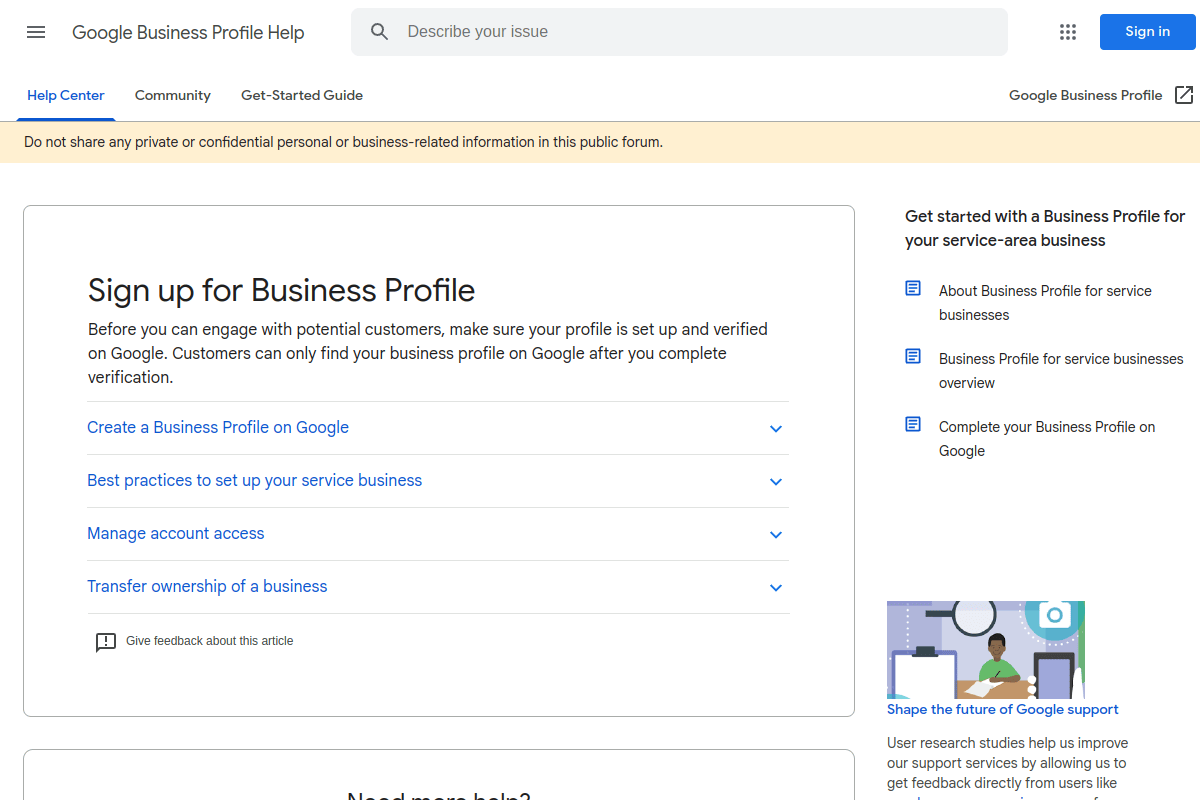
There are 7 primary locations where keywords actually influence your local rankings. I’ll cover each one with character limits, best practices, and what I’ve personally seen work.
1. Primary and Secondary Categories
This is the single most important ranking factor for showing up in the local 3-pack, according to the 2026 Local Search Ranking Factors study by BrightLocal. Your primary category determines which searches you’re eligible to appear for.
Choose the most specific category available — “Personal Injury Attorney” beats “Lawyer” every time. You can add up to 9 secondary categories, but don’t go overboard. Stick to 2-3 that genuinely describe what you do. Adding irrelevant categories dilutes your relevance signal.
How to update your categories:
- Search your business name on Google
- Click “Edit profile” on your Business Profile card
- Go to “Business category”
- Set your primary category and add relevant secondary ones
Observation: Businesses that match their primary category to their most-searched service keyword consistently see the biggest jumps in local pack visibility. Research what your top 3 competitors use before picking yours.
2. Business Description (750 Characters)
Your business description gives you 750 characters to tell Google (and customers) what you do. The catch? Only the first 250 characters are visible before the “More” truncation on mobile and desktop.
Front-load your most important keywords in those first 250 characters. Describe your core services, mention your location naturally, and include a call-to-action. Don’t waste the opening on fluff.
Example that works:
“We’re a family-owned bakery in downtown Denver specializing in custom wedding cakes, birthday cakes, and artisan sourdough bread. Serving the Denver metro area since 2015 with locally sourced ingredients.”
Example that gets you penalized:
“Best bakery Denver Colorado cake cakes wedding cake birthday cake custom cake bakery near me Denver bakery…”
Google’s AI (Gemini) understands semantic context now. Keyword stuffing in your description hurts more than it helps. Write for humans first.
3. Services Section (300 Characters Each)
This is one of the most underutilized keyword spots. You can list specific services your business offers, and each service description has a 300-character limit.
Google directly correlates service keywords with search queries to determine relevance. A personal injury firm listing “car accident lawyer” as a service is far more effective than just listing “legal services.”
You can use Google’s suggested services or create custom ones. I recommend both — use Google’s suggestions for common searches, then add custom services for niche offerings that set you apart from competitors.
4. Products Section (1,500 Characters Each)
If you sell products or offer specific packages, this section lets you add titles, descriptions, and prices. Product descriptions can be up to 1,500 characters — that’s a significant amount of keyword real estate most businesses leave completely empty.
Include your target keywords naturally in product names and descriptions. Each product links directly to a page on your website, which strengthens the connection between your GBP and your site’s overall SEO authority.
5. Google Posts (1,500 Characters Each)
Think of Google Posts as mini blog posts for your profile. Post descriptions can be up to 1,500 characters, and keywords in posts increase your chances of getting a “local justification” — that highlighted snippet Google shows in local search results.
There are three types of posts you can create:
- What’s New — updates, announcements, business news
- Offers — promotions, discounts, seasonal deals
- Events — upcoming events with dates and times
New in 2026: Post scheduling is now available directly within GBP — no more third-party tools required. Post at least twice a week. Businesses that don’t post for 30+ days see dramatic visibility drops due to Google’s freshness decay algorithm.
6. Photo File Names and Alt Text
Before uploading photos to your profile, rename the files with descriptive, keyword-rich names. best-pizza-restaurant-chicago.jpg performs better than IMG_4392.jpg.
Businesses with photos see 42% more direction requests and 35% more website clicks compared to those without (Agency Jet, 2026). Top-ranking local businesses average 250+ images on their profiles.
Use real, original photos — not stock images. After Google’s January 2026 “Authenticity Update,” user-generated and original photos carry significant weight as authenticity signals for E-E-A-T.
7. Customer Reviews (Indirect Keywords)
You can’t write your own reviews (obviously), but you can encourage customers to mention specific services or products in their feedback. When review text matches a search query, Google creates a “review justification” — highlighting that snippet directly in the local 3-pack results.
Responding to reviews with relevant keywords can reinforce relevance, but keep it genuine. Spammy keyword-stuffed responses look terrible and don’t help rankings.
| Review Statistic | Data |
|---|---|
| Consumers who trust online reviews as much as personal recommendations | 91% |
| Consumers who read reviews regularly before choosing a business | 75% |
| Consumers who won’t choose businesses rated below 3 stars | 71% |
| Consumers who prefer businesses that respond to all reviews | 88% |
| Average number of reviews for businesses in the top 3 local positions | 250 |
GBP Character Limits: Quick Reference Table
Here’s a complete character limit reference for every GBP field where keywords matter. I put this together because no other guide lists them all in one place:
| GBP Field | Character Limit | Keyword Impact |
|---|---|---|
| Business Name | 100 characters | High (but DON’T stuff keywords) |
| Business Description | 750 characters (first 250 visible) | High |
| Services (each) | 300 characters | High |
| Products (each description) | 1,500 characters | Medium-High |
| Google Posts | 1,500 characters | Medium |
| Photo File Names | No hard limit | Low-Medium |
| Review Responses | 4,096 characters | Low |
How Do You Find the Right Keywords for Your Business Profile?
Before adding keywords anywhere, you need to know which ones actually matter for your business. Here’s the process I follow:
1. Start with Google Autocomplete
Type your core service into Google Search and note the suggestions that appear. These are real queries that real people search for. Try variations like “[service] near me,” “[service] in [city],” and “best [service] [location].”
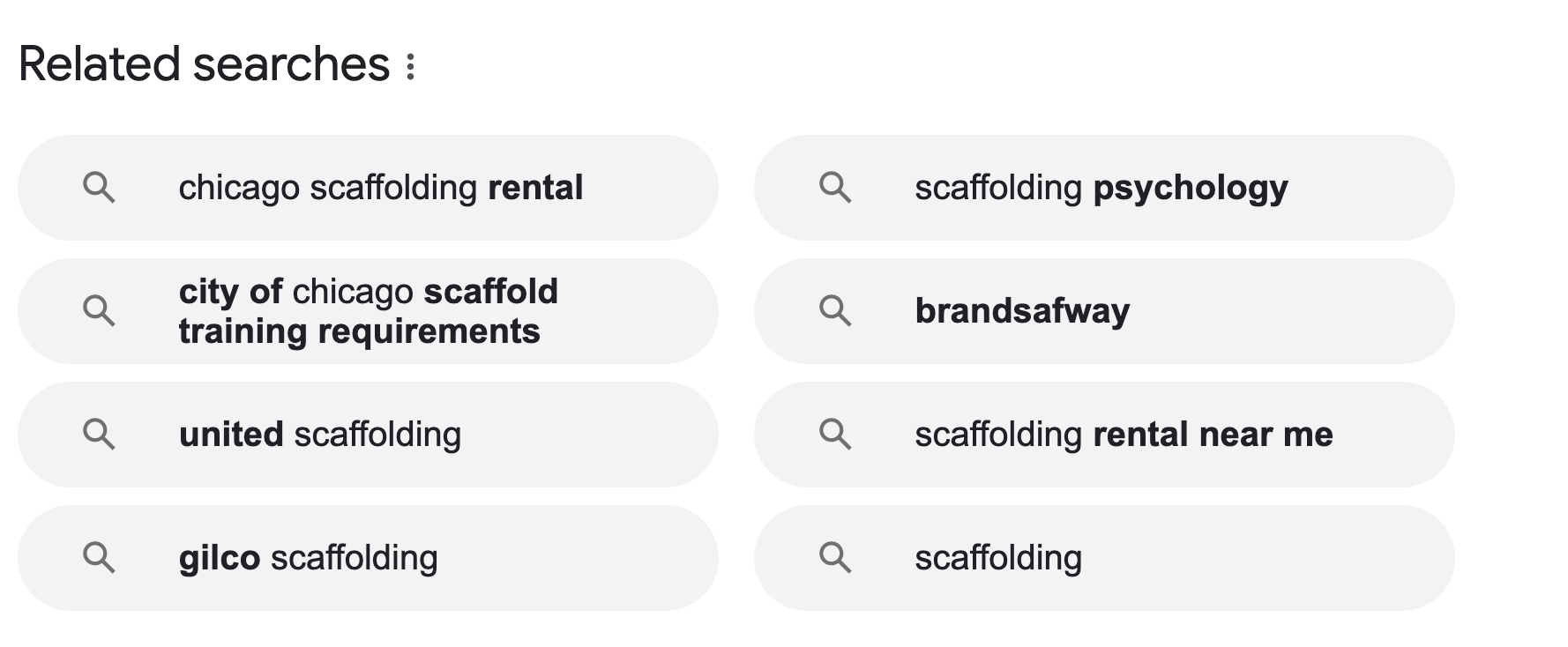
2. Check “People Also Ask” and Related Searches
Scroll through the SERP for your target keyword. The “People Also Ask” boxes reveal questions your customers are actively searching. Include these in your GBP description and posts.
3. Use a Keyword Research Tool
Tools like KWFinder by Mangools, Google Keyword Planner, or Semrush show search volume, competition, and related keywords. Focus on local-intent keywords with moderate search volume — these convert better than broad national terms.
4. Analyze Your Competitors’ Profiles
Search for your primary keyword on Google Maps. Open the top 3-5 competitor profiles and note their categories, listed services, and description keywords. Look for gaps they’re missing that you can fill.
5. Review Your GBP Insights
If you already have a profile, check your insights to see which search queries drive impressions. Double down on keywords that are already working and add related long-tail variations.
What Happened to the Q&A Section? (Ask Maps Replaced It)
If you’ve been adding keywords to your profile’s Q&A section — I have bad news.
Google officially discontinued the Q&A feature on November 3, 2025. It’s been replaced by “Ask Maps” — a Gemini AI-powered system that generates instant answers by scanning your profile, website, and reviews.
All previously posted Q&A content is being removed and will no longer be visible. This is something most guides still haven’t caught up with.
What This Means for Your Keyword Strategy
1. Move any important Q&A information into your business description, services section, or website FAQ page.
2. Keep your GBP description and services section highly detailed — Ask Maps pulls from them to generate AI answers.
3. Build a comprehensive FAQ page on your website with LocalBusiness Schema markup. The Gemini AI actively crawls it.
4. Redistribute keywords that were in your Q&A across your other GBP sections immediately.
Best Practices for GBP Keyword Optimization in 2026
Based on what’s actually driving results right now — not theory, but data:
1. Complete every section of your profile. 75% of businesses ranking in the top 3 local positions have completed description fields. Complete profiles get 7x more clicks than incomplete ones and are 70% more likely to attract store visits (WiserReview).
2. Post updates at least twice a week. The freshness decay rate in 2026 is faster than ever. Businesses inactive for 30+ days see dramatic drops in impressions. Include relevant keywords in every post naturally.
3. Get your primary category right first. It accounts for more ranking influence than any other single factor. Get this wrong, and nothing else compensates for it.
4. Upload original photos regularly. Top-3 local positions average 250+ images. Original photos (not stock) now serve as authenticity signals after Google’s January 2026 Authenticity Update.
5. Respond to every single review. 88% of consumers prefer businesses that respond to all reviews. Keep responses genuine, and naturally include relevant service keywords where it makes sense.
6. Keep NAP consistent everywhere. Your Name, Address, and Phone number must be identical across your GBP, website, and every directory listing and citation you appear on. One small inconsistency can undermine trust signals.
5 Mistakes That Can Get Your Google Business Profile Suspended
I’ve seen every one of these happen to real businesses. Avoid them:
1. Stuffing Keywords in Your Business Name
This is the #1 mistake. Adding keywords or location modifiers to your business name (e.g., “Joe’s Plumbing — Best Plumber Chicago IL”) violates Google’s guidelines. Google removed thousands of listings in 2024 for name manipulation, and enforcement has only gotten stricter since.
The penalty? A soft suspension 20% of the time, a warning 60% of the time, or a full suspension that takes 30+ days to recover from. During suspension, you’re completely invisible on Search and Maps.
2. Choosing the Wrong Primary Category
Picking a broad category like “Consultant” when you should be “Marketing Consultant” limits which searches you appear for. Always choose the most specific category available in Google’s predefined list.
3. Using Stock Photos Instead of Originals
After the January 2026 Authenticity Update, original photos carry significantly more weight than stock images. Stock photos don’t demonstrate first-hand experience and actively hurt your E-E-A-T signals. Take real photos of your business, team, products, and workspace.
4. The “Set It and Forget It” Approach
Your profile isn’t a “publish once and done” asset. Inactive profiles lose visibility faster than ever in 2026. Post regularly, upload new photos, respond to reviews, and keep your business information current.
5. Ignoring GBP Performance Insights
GBP insights tell you exactly which search queries drive impressions and what actions users take. If you’re not reviewing this data at least monthly, you’re optimizing blind — spending effort on keywords that might not matter while ignoring the ones that already work.
Does Google Business Profile Actually Help with SEO Rankings?
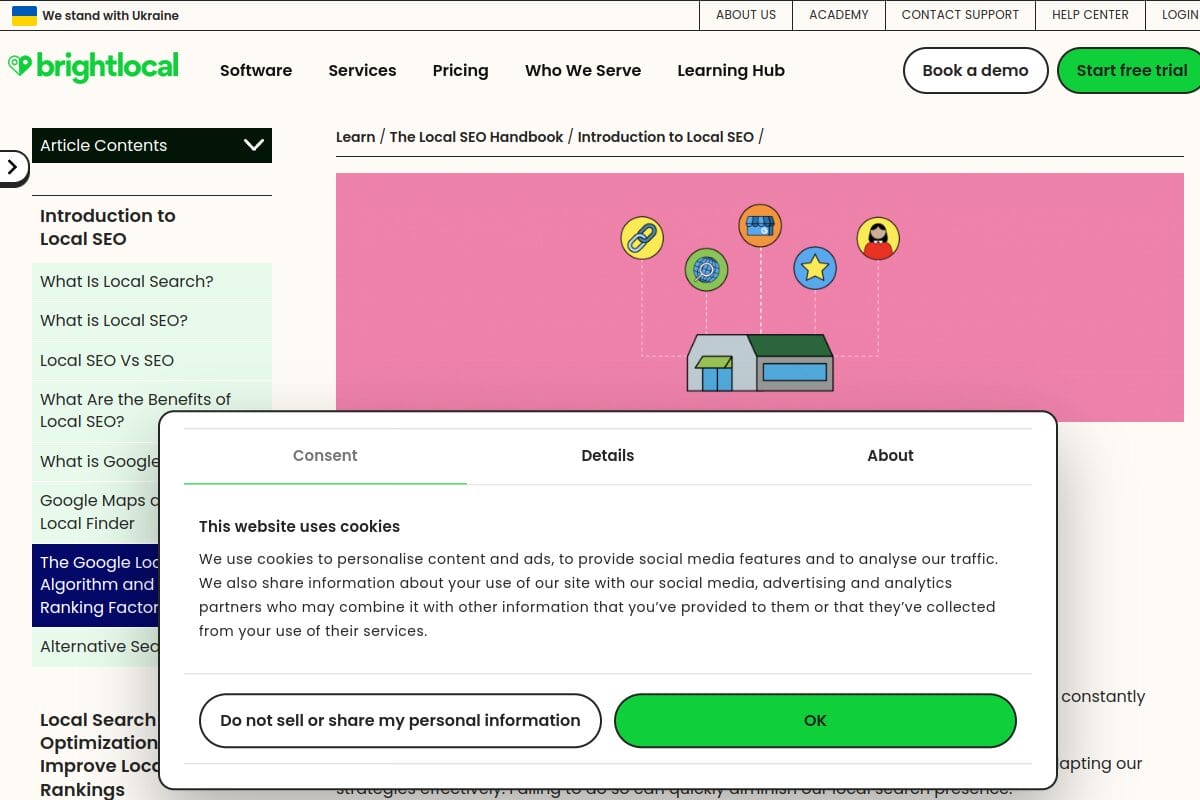
Short answer: absolutely. Here’s the data behind it.
GBP signals account for 32% of local pack ranking factors — the highest single category according to the 2026 Local Search Ranking Factors survey. Reviews contribute another 20%, and on-page SEO covers the rest alongside links and behavioral signals.
Google officially evaluates local results based on three criteria:
| Ranking Factor | What Google Measures |
|---|---|
| Relevance | How well your profile keywords, categories, and services match the search query |
| Distance | Physical proximity of your business to the searcher’s location |
| Prominence | Overall reputation — reviews, backlinks, web presence, and brand authority |
The numbers make the case clearly. Businesses in the Google 3-Pack get 126% more traffic and 93% more actions (calls, website clicks, direction requests) compared to positions 4-10 (SeoProfy, 2026).
Here are the local search statistics that should motivate you to optimize immediately:
| Local Search Statistic | Data |
|---|---|
| Percentage of all Google searches with local intent | 46% |
| “Near me” mobile searches leading to a store visit within 24 hours | 76% |
| Mobile local searches leading to a call or visit within one week | 88% |
| Local searches that result in a purchase | 28% |
| Consumers who search online for nearby businesses | 98% |
| Consumers who use Google specifically for local searches | 87% |
New in 2026: Google now heavily weights “Interaction Prominence” — user clicks on your call button, time spent viewing your posts, direction requests, and photo views all serve as ranking signals. An active, keyword-optimized profile directly drives these interactions.
GBP data also feeds directly into Google’s AI Overviews (powered by Gemini). When someone searches “best [service] near me,” AI Overviews synthesize data from GBP listings, reviews, and websites to generate answers. If your profile is keyword-rich and complete, you’re significantly more likely to be cited. This connects to the broader trend of optimizing content for AI visibility that every business needs to understand in 2026.
Frequently Asked Questions
How do I add keywords to my Google Business Profile?
Search your business on Google, click “Edit profile,” then add keywords naturally to your business description, services, products, and posts. Your primary and secondary categories also serve as keyword signals. Never stuff keywords into your business name — Google suspends profiles for that.
Can I still add keywords to the Google Business Profile Q&A section?
No. Google discontinued the Q&A feature on November 3, 2025 and replaced it with “Ask Maps” — an AI-powered system that generates answers from your profile, website, and reviews. Move any important Q&A content to your description or services section immediately.
How many categories can I add to Google Business Profile?
You can set 1 primary category and up to 9 secondary categories. However, stick to 2-3 secondary categories that genuinely describe your business. Adding irrelevant categories dilutes your relevance signal and can actually hurt your rankings.
What is the character limit for the Google Business Profile description?
The description allows 750 characters total, but only the first 250 characters are visible before Google truncates with a “More” button. Front-load your most important keywords within those first 250 characters for maximum impact.
Does keyword stuffing work on Google Business Profile?
No. Google’s AI understands context and penalizes keyword stuffing. Profiles with stuffed business names risk suspension — Google removed thousands of listings for this in 2024. Write naturally for humans first, search engines second.
How often should I post on Google Business Profile?
Post at least twice a week. Businesses inactive for 30+ days see dramatic visibility drops due to Google’s freshness decay algorithm. Include relevant keywords naturally and use a mix of updates, offers, and events.
Do Google Business Profile reviews help with local SEO?
Yes. Reviews account for approximately 20% of local pack ranking factors. When review text matches search queries, Google creates “review justifications” that appear in the local 3-pack. Top-3 positions average 250 reviews with a 4.5+ star rating.
How do I rank higher on Google Maps?
Optimize your primary category, complete every profile section, post updates twice weekly, upload original photos, get consistent reviews, and keep your NAP (Name, Address, Phone) identical across all platforms. GBP signals account for 32% of local pack rankings.
Summing Up!
Adding keywords to your Google Business Profile isn’t complicated — but doing it right in 2026 requires understanding where each keyword goes and what actually moves the ranking needle.
Focus on getting your primary category right (it’s the #1 ranking factor), write a keyword-rich description with the best stuff in the first 250 characters, fill out your services and products sections completely, and post updates at least twice a week. The businesses dominating the local 3-pack aren’t doing anything magical — they’re just more thorough and consistent than everyone else.
If you take one action from this guide today, go claim and complete your profile. With 56% of retailers not even bothering to claim theirs (WiserReview), you’ve already got a head start just by reading this far. And if you’re looking to level up your overall digital marketing toolkit, make sure your website SEO is working just as hard as your GBP.




