

TL;DR: The best products to sell online in 2026 span health supplements (60-75% margins), beauty items like press-on nails (65-80% margins), sustainable goods, smart home tech, and digital products (90%+ margins). Global ecommerce is hitting $6.88 trillion this year, with TikTok Shop alone projected at $23.4 billion in US sales. I’ve organized 60+ products below by category with real profit data, platform recommendations, and a validation framework.
I’ve been running online stores and testing ecommerce strategies for over 7 years now. And if there’s one thing I’ve learned, it’s this — picking the right product matters more than your marketing budget, your website design, or even your ad spend.
Most “products to sell” guides just list random items without telling you why they’re profitable or where to sell them. That’s not helpful. So I built this guide differently — every product below includes real market data, estimated profit margins, and which platform (Amazon, Shopify, Etsy, or TikTok Shop) it works best on.
Whether you’re starting your first online store or looking to add new products to an existing one, this list will help you make data-driven decisions instead of guessing. If you’re planning to sell digital products specifically, check out our guide on the best platforms to sell digital products as well.
Ecommerce in 2026: The Numbers You Should Know
Before jumping into specific products, here’s a quick snapshot of where online selling stands right now. These numbers should give you confidence that the opportunity is massive — and growing.
| Metric | Value (2026) |
|---|---|
| Global ecommerce sales | $6.88 trillion (Shopify) |
| Ecommerce share of retail | 21.1% |
| Mobile commerce share | 57-59% of all online sales |
| Digital buyers worldwide | 2.86 billion |
| US social commerce | $100+ billion (18% growth) |
| TikTok Shop US sales | $23.41 billion (48% YoY growth) |
| Fastest-growing region | Southeast Asia (18.6% growth) |
| AI in ecommerce market | $9.9 billion |
The takeaway? Online selling isn’t slowing down — it’s accelerating. Mobile commerce now drives nearly 60% of all sales, social commerce crossed $100 billion in the US alone, and TikTok Shop is growing faster than anyone predicted.
60+ Best Products to Sell Online in 2026
I’ve organized these products into 12 categories based on market data, Google Trends analysis, and platform sales data. Each product includes estimated profit margins and the best platform to sell it on.
Health & Wellness Products
The global health and wellness market is worth $7.19 trillion in 2026 (Towards Healthcare). People are spending more on preventive health than ever before, and this category has some of the highest profit margins in ecommerce.
1. Mushroom Supplement Blends (Lion’s Mane, Reishi)
Functional mushroom supplements have exploded — Google Trends shows a 4,500%+ surge in searches for supplement brands like Momentous. Lion’s Mane for cognitive function and Reishi for sleep are the two biggest sellers. Estimated margins sit at 60-75%, and these sell best on Shopify (DTC brands) and Amazon.
2. Collagen Peptide Powders
The beauty supplement market is projected to hit $6.6 billion by 2033 at 8.6% CAGR (Persistence Market Research). Collagen powders are the gateway product — women aged 25-45 are the core buyers. Margins range from 55-70%, and they perform well on Amazon and Shopify subscription models.
3. Gut Health Probiotics
The shift from reactive to preventive healthcare is driving massive demand for gut health products. Probiotics have steady year-round demand with 55-65% margins. Amazon dominates this category because buyers trust reviews for health products.
4. Mouth Tape (Sleep Wellness)
This is one of the fastest-growing sleep wellness trends on Google Trends right now. Mouth tape for nose breathing during sleep went from a niche biohacker product to mainstream in under a year. Production costs are extremely low, giving you 70-80% margins. TikTok Shop and Amazon are the best platforms — TikTok especially, since the product went viral through health influencers.
5. Electrolyte Powder Packets
Driven by the fitness and wellness communities, electrolyte powders have become a daily staple for millions. Brands like LMNT proved there’s massive demand for premium hydration products. Margins are 55-65%, best sold through Shopify (subscription) or Amazon.
6. Adaptogen Drink Mixes
Mushroom coffee alternatives (think MUD\WTR) are surging as people look for caffeine alternatives that reduce anxiety. The functional beverages space has 60-70% margins and works best as a DTC Shopify brand with subscription pricing.
7. Personalized Vitamin Packs
Personalized nutrition is growing at 11.37% CAGR through 2032. Companies like Care/of and Ritual proved the model works. If you can create a quiz-based recommendation system, margins hit 50-65% with strong customer retention through subscriptions.
8. Blue Light Therapy Devices
At-home LED therapy devices for acne treatment and skin rejuvenation are crossing from beauty clinics to consumer products. Margins are 40-55%, and they sell well on Amazon and through TikTok Shop influencer demos.
Beauty & Skincare Products
The global beauty and wellness market is worth over $2 trillion in 2026 (Fortune Business Insights), growing at 9% annually. Average profit margins for beauty products sit around 55%, with some categories reaching 80%.
9. Press-On Nail Kits
This is probably the single best beauty product to sell online right now. Google Trends shows a sharp, sustained rise in searches. Production cost is $2-4 per set, and you can sell them for $12-18 — that’s 65-80% gross margins. They’re lightweight (cheap to ship), highly customizable, and perfect for TikTok Shop and Etsy.
10. Clean/Organic Skincare Serums
The clean beauty market is expected to reach $21.29 billion by 2030 (Customily). Vitamin C serums, hyaluronic acid, and niacinamide serums have the highest demand. Margins of 55-80% make this one of the most profitable beauty sub-categories. Works best on Amazon and Shopify.
11. LED Face Masks
At-home spa devices are a growing trend, and LED face masks for anti-aging and acne treatment are leading the charge. These are higher ticket items ($40-150 retail) with 40-55% margins. Amazon and direct Shopify stores perform best here.
12. Hair Growth Oils & Serums
This is an evergreen niche with incredibly high repeat purchase rates. Rosemary oil for hair growth went viral in 2024-2025 and the demand hasn’t slowed. Margins sit at 60-75%, and this category dominates on Amazon and TikTok Shop.
13. Sunscreen Sticks (SPF 50+)
Year-round skincare essentials with high repeat purchase rates. The stick format is more convenient than traditional sunscreen bottles, and consumers are willing to pay a premium for it. Margins of 50-65%, best on Amazon.
14. Scalp Care Products
The skincare-to-scalp-care pipeline is real. Scalp serums, scrubs, and treatments are an emerging sub-niche that’s growing fast. Margins of 55-70%, and early movers have less competition on Amazon and Shopify.
15. Teeth Whitening Kits
A consistent best-seller that shows no signs of slowing down. LED teeth whitening kits with custom trays sell for $25-60 with production costs under $10 — giving you margins of 60-75%. TikTok Shop is the best platform for these because before/after demos drive massive conversions.
Sustainable & Eco-Friendly Products
Here’s a statistic that should get your attention: 55% of consumers are willing to pay more for eco-friendly products, and sustainable products grew 2.7x faster than conventional alternatives (SkyQuest). The sustainable ecommerce market is worth $17.36 billion and growing at 15.3% CAGR.
16. Reusable Silicone Food Storage Bags
Direct replacements for single-use plastic bags. 49% of US consumers purchased a sustainable product in the past month — up from 43% in 2024. Margins of 45-60%, sell best on Amazon and Shopify.
17. Bamboo Toothbrushes & Dental Products
Ultra-low production cost, high margins (65-75%), and strong repeat purchase behavior. These work as subscription products on Shopify or high-volume sellers on Amazon. The eco-conscious dental care niche has surprisingly low competition for how big the demand is.
18. Beeswax Food Wraps
Sustainable kitchen staples replacing plastic wrap. Great margins (55-70%) and they sell particularly well on Etsy because of the handmade/artisan appeal. Amazon is also strong for this category.
19. Refillable Cleaning Product Kits
DTC brands like Blueland proved there’s massive demand for refillable cleaning solutions. The subscription model creates predictable recurring revenue with 50-65% margins. Best on Shopify as a DTC brand.
20. Stainless Steel Drinkware & Tumblers
After Stanley Quencher went viral, search interest for stainless steel drinkware jumped 90%. Margins of 45-60%. This is a massive category on Amazon, TikTok Shop, and also works well as print-on-demand with custom designs on Etsy.
21. Biodegradable Phone Cases
The phone case market is enormous, and eco-friendly cases command a premium. With sustainability labels driving 13% more demand on Amazon, biodegradable cases with 50-65% margins are a smart play. Best on Amazon and Shopify.
22. Solar-Powered Phone Chargers
A crossover product hitting sustainability, tech, and outdoor markets simultaneously. Margins of 35-50%, and they sell well on Amazon. The outdoor adventure niche is particularly receptive.
Smart Home & Tech Gadgets
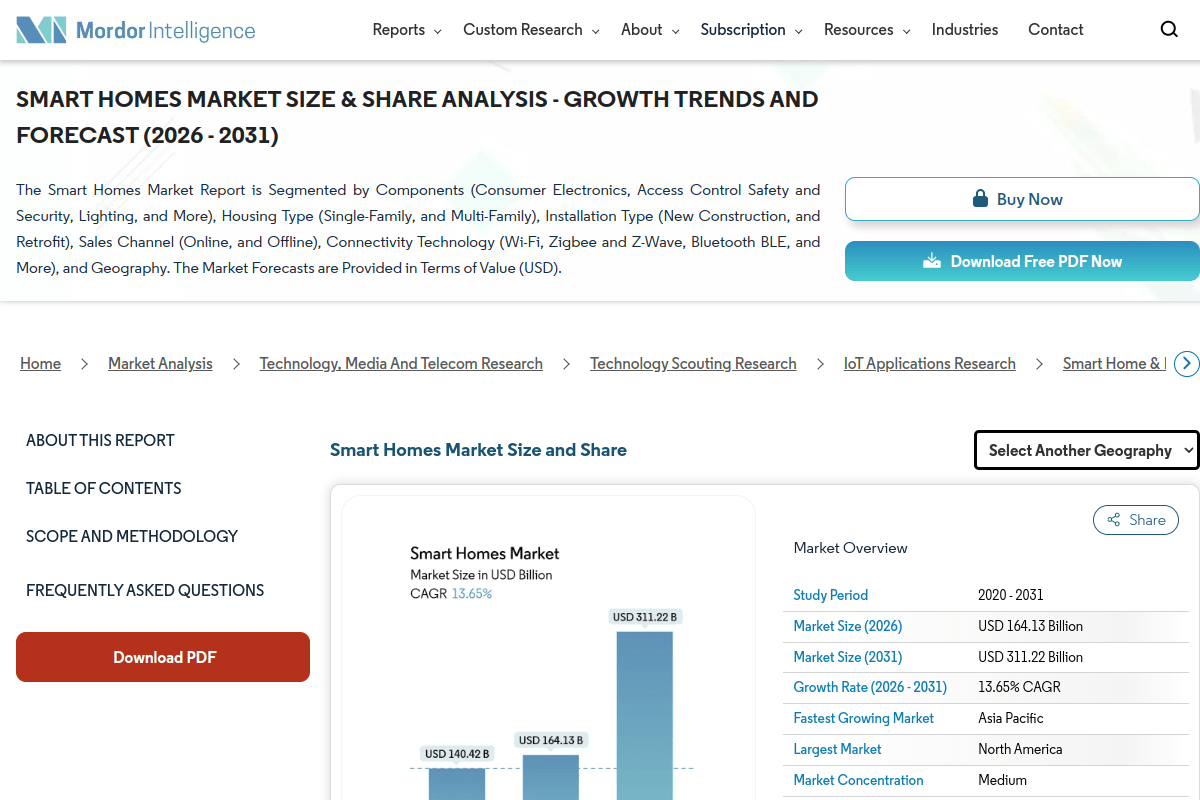
The smart home market is worth $164.13 billion in 2026 and growing at 13.65% CAGR (Mordor Intelligence). By 2026, 69% of households are expected to have at least one smart home device.
23. Smart LED Strip Lights
Still one of the most popular products on TikTok — room makeover videos featuring LED strip lights consistently go viral. Low cost, easy to ship, and 40-55% margins. Best on Amazon and TikTok Shop.
24. Smart Plugs & Switches
The entry-level smart home product. High volume, steady demand, and 35-50% margins. Amazon dominates this category. WiFi-enabled smart plugs that work with Alexa and Google Home are the biggest sellers.
25. Video Doorbells
Home security awareness is driving adoption of video doorbells. While Ring dominates the premium market, there’s significant demand for affordable alternatives in the $30-80 range with 30-45% margins. Amazon is the primary platform.
26. Portable Power Stations
Electric vehicle growth and power outage preparedness are driving demand for portable battery stations. Higher ticket items ($100-500+) with 25-40% margins. Amazon and Shopify work best for this category.
27. Smart Water Bottles
Water bottles that track hydration and remind you to drink — a perfect health-tech crossover product. Margins of 40-55%, selling well on Amazon and through fitness influencers on TikTok Shop.
28. AI-Powered Security Cameras
AI integration in home security is surging — cameras that can distinguish between people, pets, and packages are commanding premium prices. Margins of 30-45%, primarily an Amazon category.
Pet Products
The US pet market alone is worth $165.6 billion in 2026 (Mordor Intelligence), and ecommerce now holds 51% of all pet product sales. Interestingly, cat products are growing at 7.8% CAGR — outpacing dog products. Pet owners treat their animals like family members, which means they’re willing to spend premium prices.
29. Pet GPS Trackers
Smart pet tech is one of the fastest-growing sub-categories. GPS collars and trackers give pet owners peace of mind, and they’re willing to pay $30-80 for that. Margins of 35-50%, best on Amazon.
30. Personalized Pet Bandanas & Collars
Personalization + emotional pet spending = high margins. Custom pet bandanas cost $2-5 to produce and sell for $15-30. That’s 60-75% margins, and Etsy is the perfect platform for this. Print-on-demand makes it zero-inventory too.
31. Interactive Puzzle Feeders
Mental stimulation products for pets are trending as owners become more aware of pet enrichment. Puzzle feeders slow down eating and keep pets engaged. Margins of 45-60%, selling well on Amazon and TikTok Shop (pet videos perform incredibly well).
32. Pet Probiotics & Supplements
Just like human wellness trends, pet wellness is booming. Probiotics, joint supplements, and calming treats are high-margin (55-70%) products with strong repeat purchases. Amazon is the dominant platform.
33. Cat Enrichment Toys
Cat spending is growing faster than dog spending (7.8% vs lower CAGR). Interactive cat toys, cat trees, and automated laser toys are in high demand. Margins of 50-65%, Amazon and TikTok Shop.
34. Automatic Pet Feeders
Smart home integration extends to pet care. WiFi-enabled automatic feeders that work with phone apps are replacing basic timed feeders. Margins of 30-45%, primarily an Amazon category.
Fashion & Apparel
Worldwide apparel revenue is projected to hit $1.89 trillion in 2026 (Shopify). The print-on-demand market alone (which is mostly apparel) is worth $12.96 billion and growing at 26% CAGR (Printful). T-shirts remain the #1 seller on Shopify, but several new trends are emerging.
35. Wide-Leg Linen Pants
Google named these a “breakout travel style” for 2026. Search interest is at an all-time high. If you’re doing POD or private label apparel, linen pants are one of the highest-demand items right now. Margins of 50-65%, best on Shopify, Etsy, and TikTok Shop.
36. Athleisure Leggings
A consistent Shopify best-seller that shows no signs of slowing down. The athleisure market is driven by the fitness lifestyle trend and work-from-home culture. Margins of 55-70%, best on Shopify and Amazon.
37. Organic Cotton T-Shirts
The classic POD staple, now with a sustainability premium. Organic cotton tees command higher prices than conventional cotton, and buyers actively search for them. Margins of 50-65%, perfect for Shopify POD stores and Etsy.
38. Custom Embroidered Hoodies
Personalized embroidered hoodies have year-round demand and command premium prices ($45-80 retail). The embroidery gives a higher perceived value than screen printing. Margins of 55-70%, best on Etsy and Shopify.
39. Minimalist Jewelry
Dainty gold-plated necklaces, stackable rings, and personalized name jewelry are evergreen best-sellers. Production costs can be as low as $3-8 per piece with retail prices of $20-50+. That’s 65-80% margins. Etsy is the dominant platform, followed by Shopify and TikTok Shop.
Home Decor & Living
Home decor accounts for 27% of the print-on-demand market and is growing at 28% CAGR — faster than apparel (Printful). People are spending more time at home and investing in making their spaces look better.
40. Custom Wall Art & Canvas Prints
One of the highest-margin POD products available. Custom canvas prints cost $5-15 to produce and sell for $30-80+. Margins of 60-75%, and they sell exceptionally well on Etsy, Amazon Handmade, and Shopify.
41. Weighted Blankets
A trending Shopify best-seller backed by genuine wellness benefits (anxiety and sleep improvement). Higher ticket item ($40-100+) with 40-55% margins. Amazon dominates for weighted blankets because of the trust factor with health-related products.
42. Indoor Planters & Pots
The indoor plant trend continues strong into 2026. Minimalist ceramic planters, self-watering pots, and hanging planters have consistent demand. Margins of 50-65%, best on Amazon, Etsy, and TikTok Shop.
43. Smart LED Candles
Traditional scented candles are being upgraded with smart features — flameless LED candles with realistic flickering and remote controls. They combine the home decor appeal of candles with the safety and convenience of technology. Margins of 45-60%, Amazon is the primary platform.
44. Modular Shelving & Storage
Compact living spaces are driving demand for modular, space-saving storage solutions. Cube shelving systems and wall-mounted organizers are consistent sellers. Margins of 35-50%, best on Amazon.
Home Office & Remote Work Products
With 40%+ of the global workforce still working remotely at least part-time, home office products remain in high demand. This isn’t a pandemic trend anymore — it’s the new normal.
45. Under-Desk Treadmills
The movement-while-working trend is backed by the Mayo Clinic and gaining mainstream adoption. Under-desk treadmills sell for $150-400 with margins of 25-40%. Amazon is the dominant platform. These also go viral on TikTok — “walk and work” content gets millions of views.
46. Ergonomic Laptop Stands
Simple, lightweight, and solves a real pain point (literally — neck strain from laptop use). Margins of 45-60%, high volume on Amazon. Aluminum and bamboo stands command the highest prices.
47. Monitor Light Bars
Desk setup content on YouTube and TikTok has driven massive demand for monitor light bars. They reduce eye strain and look great in aesthetic desk setups. Margins of 40-55%, Amazon is the best platform.
48. Desk Organizer Systems
Modular, aesthetic desk organizers are trending across social media. “Clean desk” and “desk setup” content drives consistent demand. Margins of 50-65%, selling well on Amazon, Etsy (for handmade/wooden options), and TikTok Shop.
49. Ergonomic Vertical Mice
RSI (repetitive strain injury) prevention awareness is growing, and vertical mice are the most recommended ergonomic upgrade. Margins of 45-60%, Amazon dominates this niche.
Automotive Accessories
The automotive accessories market is valued at $279.82 billion in 2026, with online sales accounting for roughly 30% of total revenue (Mordor Intelligence). Wireless and smart accessories are driving the growth.
50. Wireless CarPlay/Android Auto Adapters
Millions of car owners want to upgrade their older vehicles with wireless CarPlay without buying a new car. These adapters sell for $40-100 with 35-50% margins. Amazon is the primary platform, but these also do well on TikTok Shop with demo videos.
51. 4K Dash Cams with Cloud Storage
Dash cams are evolving — 4K resolution with AI features (lane departure, collision detection) and cloud storage are the new standard. Margins of 30-45%, Amazon dominates. The insurance discount angle drives purchases.
52. Wireless Car Charging Mounts
Automotive wireless charger shipments increased by 50% recently. Phone mounts with built-in wireless charging solve two problems at once. Margins of 40-55%, selling well on Amazon and TikTok Shop.
53. Portable Car Vacuums
Compact, cordless car vacuums are a steady seller. They’re lightweight, easy to demo in videos, and solve a universal problem. Margins of 35-50%, best on Amazon and TikTok Shop.
54. Portable EV Chargers
Electric vehicle adoption is accelerating, and not every EV owner has home charging. Portable Level 2 chargers are a growing niche with 25-40% margins. Amazon is the primary platform, and this category has relatively low competition.
Digital Products
Here’s why I love digital products: zero inventory, near-zero fulfillment costs, and margins above 90%. Once you create a digital product, every additional sale is almost pure profit. The global digital products market is projected to reach $920 billion by 2033. If you need help choosing a platform, read our detailed guide on the best platforms to sell digital products.
55. AI Prompt Packs (ChatGPT, Midjourney, Claude)
This is being called the hottest digital product category of 2026. Pre-built prompt collections for AI tools — business prompts, creative writing prompts, image generation prompts — are selling like crazy. Margins are 90-95%, and they sell best on Etsy, Gumroad, and Shopify. Zero inventory, infinite scalability.
56. Online Courses
If you have expertise in anything — finance, fitness, cooking, coding, marketing — you can package it into an online course. Margins of 85-95% after creation costs. Platforms like Teachable, Kajabi, or even Shopify work best. Course creators are building six-figure businesses with a single well-made course.
57. Notion & Productivity Templates
The creator economy + remote work demand has made Notion templates a legitimate business. Templates for project management, personal finance tracking, content calendars, and student planners sell for $5-50 each. Margins are 90-95%, and Etsy, Gumroad, and the Notion marketplace are the best platforms.
58. Social Media Content Templates (Canva)
Every small business needs social media content, but not every business owner is a designer. Pre-made Canva template packs for Instagram, LinkedIn, and TikTok sell for $10-50 and cost nothing to reproduce. Margins of 90-95%, best on Etsy and Creative Market.
59. Printable Planners & Journals
The wellness + productivity intersection creates steady demand for printable planners, habit trackers, and guided journals. Low effort to create, 85-95% margins, and Etsy is the #1 platform. Budget planners and fitness journals are the biggest sub-niches.
60. eBooks (Self-Help, Finance, Fitness)
Self-published eBooks on Amazon KDP still generate passive income. Finance guides, fitness programs, and recipe collections consistently sell. Margins of 90-95% after the initial writing effort, and Amazon KDP gives you access to the world’s largest eBook marketplace.
Baby & Kids Products
The global baby products market is worth $355.9 billion, projected to reach $475.2 billion by 2030 (Grand View Research). Online baby product retailing is growing at 8.7% CAGR. Parents spend premium on safety and quality — which means higher margins for sellers.
61. Organic Baby Skincare
Parents prioritize clean, safe ingredients for their babies. Organic baby lotions, shampoos, and diaper creams command premium prices. Margins of 55-70%, and Amazon is the dominant platform (parents trust Amazon reviews for baby products).
62. Montessori-Style Toys & Kits
Educational play products following the Montessori method are one of the hottest baby/toddler categories. Companies like Lovevery proved the subscription model works for this niche. Margins of 50-65%, selling well on Amazon, Etsy (for handmade wooden toys), and Shopify (subscription boxes).
63. Smart Baby Monitors
Baby monitors with AI features — breathing detection, sleep tracking, and temperature alerts — are replacing basic audio monitors. Higher ticket ($80-250) with margins of 30-45%. Amazon is the primary platform.
Food & Beverage Products
Online grocery and specialty food ecommerce is a $203+ billion market. The key to succeeding in food online isn’t competing with grocery stores — it’s selling specialty, niche products that people can’t find locally.
64. Mushroom Coffee Blends
Functional beverages are one of the fastest-growing food categories. Mushroom coffee blends (coffee + Lion’s Mane + Chaga) offer reduced caffeine with cognitive benefits. Margins of 55-70%, best on Shopify (DTC with subscriptions) and Amazon.
65. Specialty Hot Sauce
Shelf-stable, high repeat purchase rates, and passionate communities. The hot sauce market has surprisingly loyal customers who collect and try new brands. Margins of 50-65%, selling on Amazon, Shopify, and at farmers’ markets/specialty stores.
66. Clean Label Protein Bars & Snacks
Health-conscious snacking is driving a 677% rise in protein product searches. Clean label (minimal ingredients, no artificial additives) protein bars command premium prices. Margins of 45-60%, Amazon and Shopify subscription models work best.
67. Curated Snack Subscription Boxes
Subscription boxes combining discovery with convenience. International snack boxes, healthy snack boxes, and keto snack boxes all have dedicated audiences. Margins of 40-55%, best on Shopify with a subscription plugin like Recharge.
Where to Sell: Picking the Right Platform in 2026
The product you pick matters — but where you sell it matters just as much. Here’s a breakdown of the four major platforms and what works best on each.
| Platform | Best For | Fees | Pros | Cons |
|---|---|---|---|---|
| Amazon | Health, electronics, home, pet, baby products | 15% referral + FBA fees | Massive built-in traffic, trust factor, FBA handles shipping | High competition, limited branding, Amazon owns the customer |
| Shopify | DTC brands, subscriptions, POD, digital products | $39/mo + payment processing | Full brand control, subscription tools, app ecosystem | You drive your own traffic, requires marketing budget |
| Etsy | Handmade, personalized, vintage, digital downloads | 6.5% transaction + $0.20 listing | Built-in audience for handmade/unique items, SEO-friendly | Limited customization, fees add up, Etsy controls search |
| TikTok Shop | Beauty, fashion, gadgets, viral products | 5% commission (rising) | $23.4B market, 50% of sales via influencers, youngest audience | Uncertain regulatory future, requires video content |
My recommendation: If you’re just starting out, pick ONE platform and master it before expanding. Amazon is best for products that people actively search for (health, electronics, home). Shopify is best if you want to build a brand. Etsy is best for creative/handmade products. TikTok Shop is best if you can create engaging video content.
If you’re building a Shopify store and need a website, our WordPress tutorial for beginners covers the basics of getting online, and you’ll also want to check out our free logo maker tools to create professional branding without spending a fortune.
How to Validate a Product Before Investing Money
Don’t just pick a product from this list and start ordering inventory. Here’s my 5-step validation process that takes about 15 minutes and can save you thousands of dollars in wasted investment.
Step 1: Check Google Trends. Search your product on Google Trends. You want to see a stable or rising trend — not a spike that’s already declining. Compare it to similar products in the same category. If the trend line is going down, move on.
Step 2: Check Amazon Best Seller Rank (BSR). Find similar products on Amazon and check their BSR. A BSR under 10,000 in the main category means strong demand. Under 5,000 means excellent demand. Over 50,000? The demand might not be there.
Step 3: Count TikTok Hashtag Views. Search your product on TikTok. If related hashtags have 100M+ views, there’s genuine consumer interest. If there’s barely any content, the product might not have viral potential for social commerce.
Step 4: Check Competition on Your Target Platform. Search for the product on the platform you plan to sell on. Too many sellers with thousands of reviews means it’s hard to break in. Too few sellers might mean low demand. Look for categories with moderate competition where you can differentiate.
Step 5: Calculate Your Margins. Get sample pricing from suppliers (Alibaba, domestic wholesalers, or POD platforms). Factor in product cost, shipping, platform fees, and marketing budget. If your net margin isn’t at least 20-30% after all costs, the product might not be worth the effort.
Products to Avoid in 2026
Every other guide just tells you what to sell. Let me also tell you what not to sell — because avoiding bad products is just as important as finding good ones.
Generic phone accessories — The market is absolutely flooded. Unless you have a unique angle (like biodegradable cases, which I listed above), basic phone cases and chargers have razor-thin margins and brutal competition.
Fidget toys and one-hit viral products — Remember fidget spinners? Pop-its? These products spike and crash within months. By the time you set up your store and order inventory, the trend is usually dying. Stick to products with sustained demand curves.
Weight loss supplements — Heavily regulated (FDA scrutiny), high liability risk, and constant platform policy violations. Amazon and Facebook regularly ban weight loss supplement ads. The legal risk isn’t worth it.
Cheap electronics knockoffs — Low-quality Bluetooth headphones, smartwatch clones, etc. These have high return rates (15-25%), which destroys your margins and can get your Amazon account suspended.
Oversaturated POD designs — “Live, Laugh, Love” and generic motivational quotes on mugs and t-shirts. These markets are completely saturated. If you’re doing POD, focus on micro-niches (specific hobbies, professions, or interests) instead of generic designs.
Startup Costs: How Much Do You Actually Need?
One of the biggest questions I get is: “How much money do I need to start?” Here’s the honest breakdown based on the business model you choose.
| Business Model | Startup Budget | Best For | Target Net Margin |
|---|---|---|---|
| Digital Products | $0-100 | Templates, courses, eBooks, AI prompts | 80-95% |
| Print-on-Demand | $100-500 | Apparel, wall art, drinkware, pet accessories | 20-40% |
| Dropshipping | $500-2,000 | Gadgets, home decor, car accessories | 10-30% |
| Private Label | $2,000-10,000 | Beauty, supplements, pet products, food | 25-50% |
| Wholesale/Bulk Buy | $5,000-20,000 | Electronics, fashion, home goods | 15-35% |
If you’re on a tight budget, digital products and print-on-demand let you start with almost no money. If you have more capital and want to build a real brand, private label on Amazon or a DTC Shopify store gives you the highest long-term returns.
For marketing your products effectively, I’d recommend checking out our guide on 19 digital marketing tools with real-world examples — it covers the exact tools I use for everything from SEO to email marketing.
Frequently Asked Questions
What is the most profitable product to sell online in 2026?
Digital products like AI prompt packs, online courses, and templates offer the highest margins (90-95%). For physical products, press-on nail kits (65-80% margins), mushroom supplements (60-75%), and minimalist jewelry (65-80%) are among the most profitable categories in 2026.
Is dropshipping still profitable in 2026?
Yes, but the low-effort model is dead. Successful dropshippers in 2026 use automation tools (79% of them), focus on niche products that solve real problems, and build actual brands. Target net margins of 10-30% are realistic with the right product and supplier.
What are the best products to sell on Amazon in 2026?
Health supplements, pet products, baby care items, smart home devices, and beauty products perform best on Amazon. These categories benefit from Amazon’s trust factor and review system. Products priced between $15-50 with BSR under 10,000 typically have the best opportunity.
What products are trending on TikTok Shop in 2026?
Beauty products (press-on nails, skincare serums, teeth whitening), fashion items (athleisure, wide-leg pants), gadgets (LED strip lights, car accessories), and health products (mouth tape, electrolyte powders) dominate TikTok Shop. Products that demonstrate well in short video content perform best.
What are the easiest products to sell online for beginners?
Digital products (zero inventory), print-on-demand items (no upfront investment), and small accessories on Etsy (low competition) are the easiest starting points. Notion templates, custom t-shirts, and personalized pet bandanas are popular beginner products with low risk.
How do I find trending products to sell online?
Use Google Trends to check search volume direction, Amazon Best Sellers for demand validation, TikTok hashtag views for social interest, and tools like Jungle Scout or Helium 10 for Amazon-specific data. Validate across multiple sources before investing.
What digital products sell the most online?
AI prompt packs are the hottest digital product in 2026. Online courses, Notion/productivity templates, Canva social media templates, printable planners, and eBooks also sell consistently. Etsy, Gumroad, and Shopify are the best platforms for digital products.
How much money do I need to start selling products online?
It depends on the model: $0-100 for digital products, $100-500 for print-on-demand, $500-2,000 for dropshipping, and $2,000-10,000 for private label products. Start with digital or POD if you’re on a tight budget.
Summing Up!
The ecommerce opportunity in 2026 is bigger than ever — $6.88 trillion globally, with social commerce, TikTok Shop, and AI tools creating entirely new ways to find and sell products. But the days of randomly picking a product and hoping it sells are over.
If I had to start fresh today with limited capital, I’d go with digital products (AI prompt packs or Notion templates) on Etsy and Gumroad — zero inventory, 90%+ margins, and you can start in a weekend. If I had $2,000-5,000 to invest, I’d private-label a health or beauty product on Amazon using the validation framework above.
Whatever you choose, validate before you invest, pick one platform to master first, and build around products with real sustained demand — not fleeting trends. And don’t forget to set up proper email marketing from day one. It’s still the highest-ROI marketing channel for ecommerce sellers.



