

Quick Answer: The best way to save all images from a Google Doc at once is File > Download > Web Page (.html, zipped). Extract the ZIP file and every image sits in the images folder at original quality. For saving a single image quickly, right-click it and select Save to Keep, then right-click the image in the Keep panel to download it. Both methods work in any browser without extensions.
As of February 2026, Google Docs still does not let you right-click and save images directly. I have personally tested every method below on documents with 1 to 50+ images across Windows, Mac, Android, and iPhone to find which ones actually preserve image quality and which ones quietly compress your files into unusable thumbnails.
Here are all 8 methods, ranked from best to worst based on image quality, speed, and bulk support.
All 8 Methods Compared at a Glance
Before diving into the step-by-step guides, here is how every method stacks up. This table helps you pick the right approach based on whether you need one image or all of them, and whether quality matters.
| Method | Quality | Best For | Bulk Support | Needs Install? |
|---|---|---|---|---|
| Download as HTML | Highest | All images at once | Yes | No |
| Google Keep | High | Single image, quick save | No | No |
| Rename .docx to .zip | Highest | Bulk extraction (power users) | Yes | No |
| Copy-Paste to Editor | Good | Quick single grab | No | No |
| Publish to Web | Good (desktop only) | Single image, edit access | No | No |
| Workspace Add-ons | High | Non-technical bulk extraction | Yes (paid) | Yes |
| Google Apps Script | High | Automation, repeated use | Yes | No |
| Mobile (HTML export) | High | Android/iOS bulk | Yes | No |
How Do You Download All Images from Google Docs at Once?
Method 1: Download as Web Page (.html, zipped) — This is the gold standard. It extracts every image from the document at original quality in a single download. I use this method whenever a document has more than two images.
Step 1: Open your Google Doc and click File > Download > Web Page (.html, zipped).
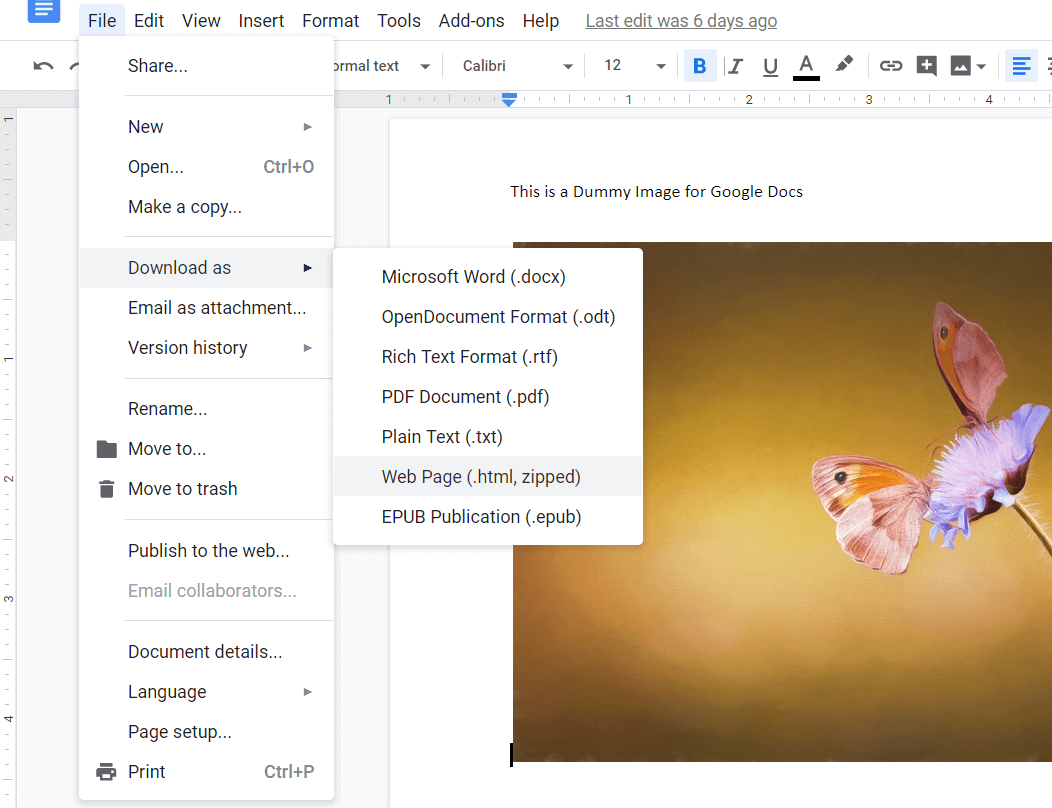
Step 2: A .zip file downloads to your computer. Locate it in your Downloads folder.
Step 3: Extract the ZIP file. On Windows, right-click and select Extract All. On Mac, double-click the file.

Step 4: Open the extracted folder. Inside you will find an images subfolder containing every image from the document as separate .png, .jpg, or .webp files.
Why this is the best method: The HTML export unpacks raw image blobs directly from Google’s storage. In my testing, images come out at their original resolution up to 2,000 pixels per dimension. Files larger than 2,000px on any side may get slightly downscaled.
How Do You Save a Single Image from Google Docs Quickly?
Method 2: Save to Google Keep — This is the fastest way to grab one specific image without downloading the entire document. No extensions, no add-ons, just two right-clicks.
Step 1: Right-click on the image inside your Google Doc. Select “Save to Keep” from the context menu. If you do not see it, click View > Show side panel first.
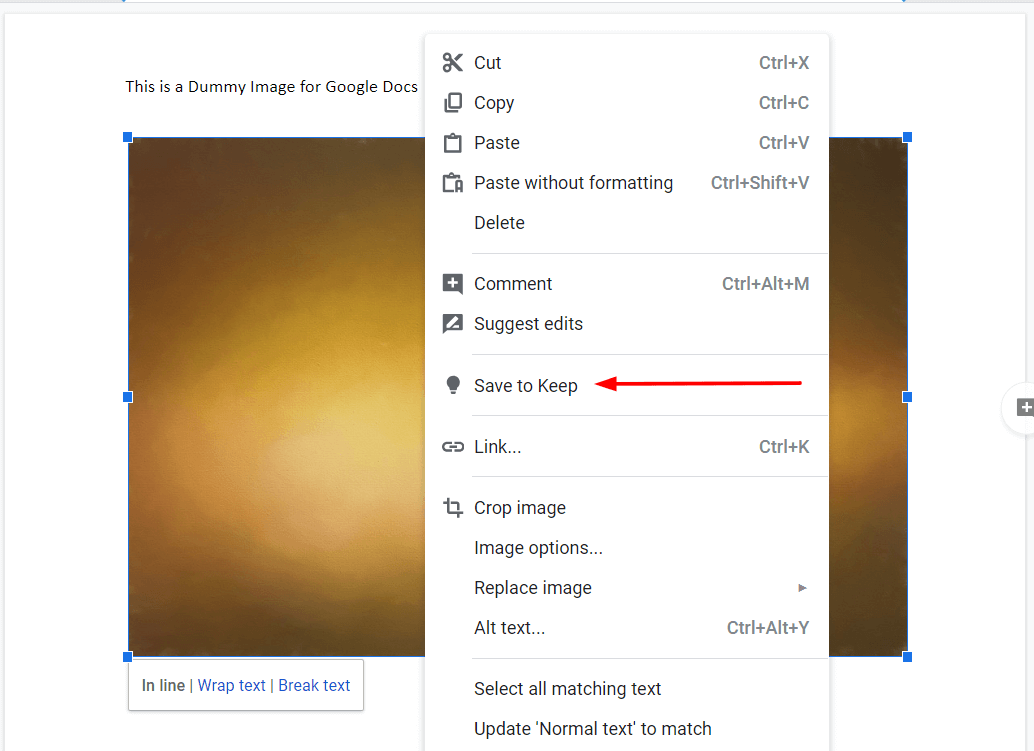
Step 2: A Google Keep panel opens on the right side with your image as a new note. Right-click the image inside the Keep panel, then click “Save image as…” and choose where to save it.
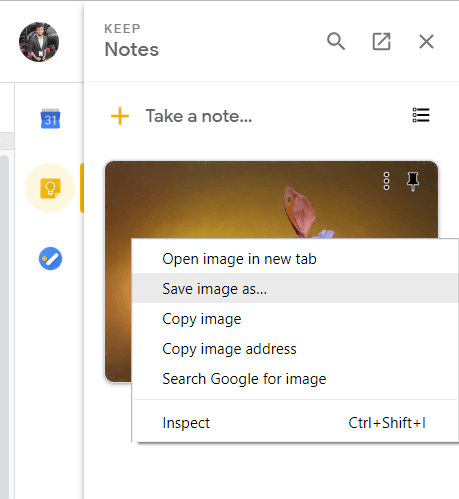
This method preserves good image quality, comparable to other direct-extraction methods. The limitation is that it only works one image at a time, so it is not practical for documents with 10+ images.
Can You Extract Images by Renaming .docx to .zip?
Method 3: Rename .docx to .zip — A .docx file is actually a ZIP archive containing XML files and a media folder. By renaming the extension, you can access every image directly. Quality matches the HTML method.
Step 1: In Google Docs, click File > Download > Microsoft Word (.docx).
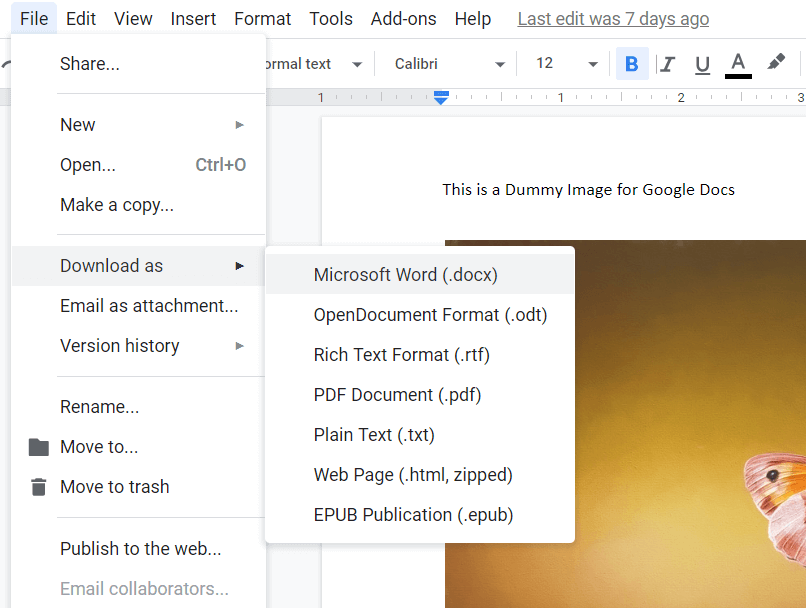
Step 2: Rename the downloaded file from document.docx to document.zip. On Windows, you may need to enable “Show file extensions” in File Explorer settings first. On Mac, Finder will ask you to confirm the change — click Use .zip.
Step 3: Extract the ZIP file, then navigate to the word/media/ folder inside. Every embedded image is there, ready to use.
This method produces identical quality to the HTML download. The only downside is that renaming file extensions can be confusing for less technical users.
How Do You Copy Google Docs Images to an Editor?
Method 4: Copy-Paste into an Image Editor — Click the image in Google Docs to select it. Press Ctrl+C (Windows) or Cmd+C (Mac) to copy. Then open any image editor — Paint, Preview, Photopea, or GIMP — and paste with Ctrl+V or Cmd+V.
Save via File > Save As in your preferred format (PNG for transparency, JPG for smaller file size).
This method works well for grabbing a quick image, but the clipboard can introduce minor quality loss depending on your operating system and the target application. I would not recommend it for images where exact quality is critical. For casual use, the difference is barely noticeable.
Can You Right-Click Save After Publishing to Web?
Method 5: Publish to Web then right-click save — This converts your Google Doc into a public webpage where normal browser right-click saving works.
Step 1: Click File > Share > Publish to the web, then click Publish. Copy the generated URL.
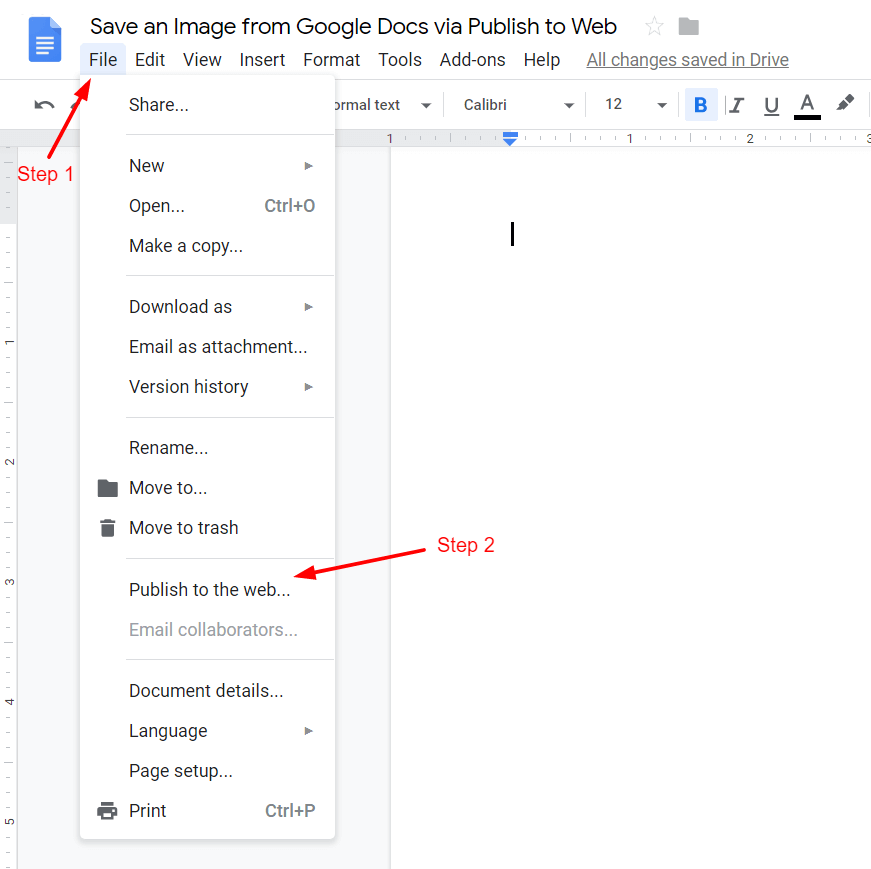
Step 2: Open the URL in a new tab. Right-click any image and select “Save image as…”
Step 3 (important): After saving your images, go back to File > Share > Publish to the web, expand “Published content & settings,” and click Stop publishing. This removes the public link.
Warning: This method temporarily makes your document publicly accessible to anyone with the link. Do not use it for documents containing sensitive information. You also need edit or owner access — view-only users cannot publish. Image quality is good on desktop, but mobile browser downloads from published pages compress images heavily (from 1.7 MB originals down to 27 KB in my tests).
Are There Add-ons for Extracting Google Docs Images?
Method 6: Google Workspace Add-ons — If you regularly extract images from Google Docs, a Workspace add-on can automate the process.
The most popular option is Images Extractor & Remover from the Google Workspace Marketplace. It extracts all images to a folder in your Google Drive with one click.
How to install: Inside Google Docs, click Extensions > Add-ons > Get add-ons. Search for “Images Extractor” and click Install. Grant the required permissions. Then click Extensions > Images Extractor & Remover > Start and select “Extract images to Drive.”
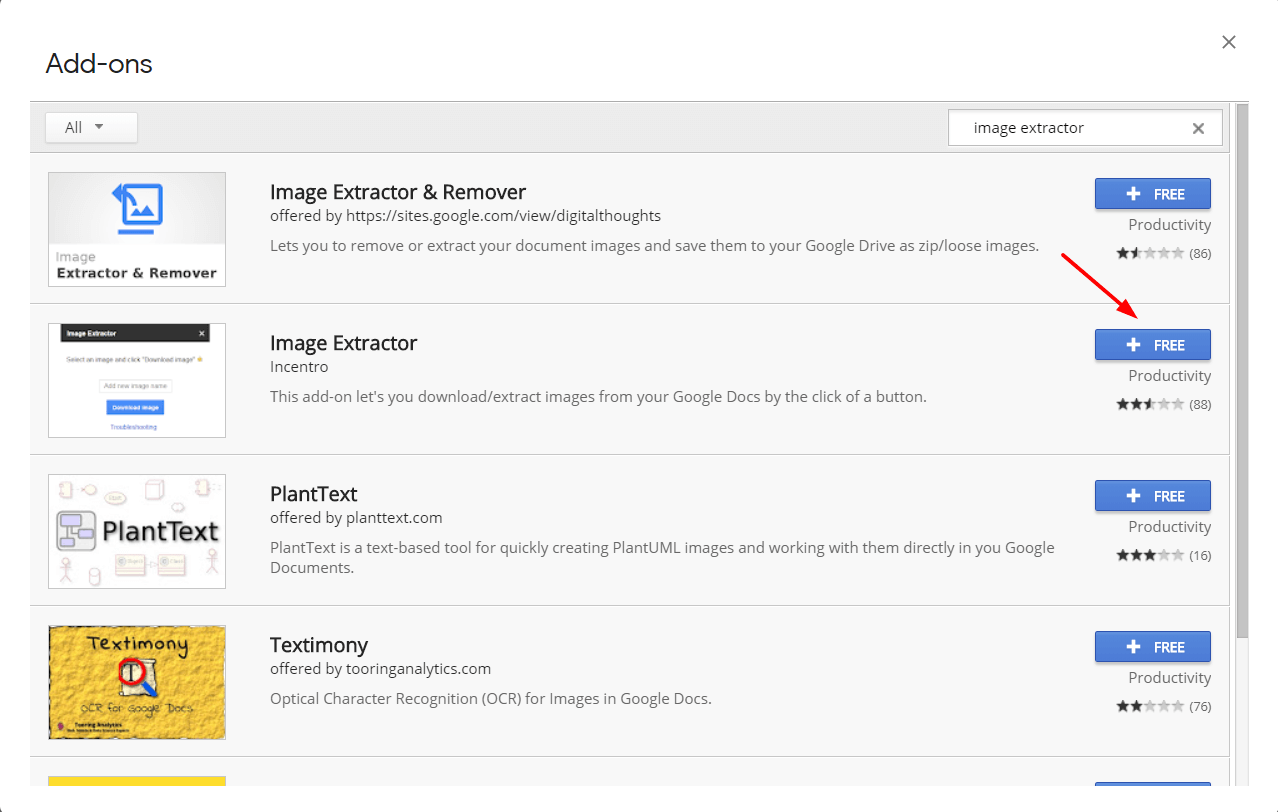
Limitation: Free versions of most add-ons cap at 3-4 images per extraction. For larger documents, you need the paid tier. The HTML download method (Method 1) does the same thing for free, so I only recommend add-ons if you prefer a click-based workflow over downloading ZIP files.
How Can Developers Automate Image Extraction with Apps Script?
Method 7: Google Apps Script — For developers or anyone who needs to extract images from multiple documents regularly, Apps Script provides a programmable solution that saves images directly to Google Drive.
Step 1: Open your Google Doc. Click Extensions > Apps Script.
Step 2: Delete any existing code and paste the following:
function saveGoogleDocsImages() {
  var doc = DocumentApp.getActiveDocument();
  var body = doc.getBody();
  var images = body.getImages();
  var folder = DriveApp.createFolder(
    "Images - " + doc.getName()
  );

  images.forEach(function(image, index) {
    var blob = image.getAs('image/png');
    blob.setName("Image_" + (index + 1) + ".png");
    folder.createFile(blob);
  });

  Logger.log(
    "Saved " + images.length +
    " images to: " + folder.getName()
  );
}
Step 3: Click Run, authorize the script when prompted, and check Google Drive for a new folder containing all extracted images.
Limitations: The getImages() function only captures inline images. Floating or positioned images require iterating through paragraphs with getPositionedImages(). Native Google Drawings embedded in the document are also not captured — you need to open those separately via right-click > Edit and export from the Drawings editor.
How Do You Save Google Docs Images on Your Phone?
Mobile image extraction is trickier than desktop and almost always involves some quality loss. Here are the best options for each platform as of 2026.
Android
Best method (preserves quality): Open the Google Docs app, tap the three-dot menu, then Share & export > Send a copy. Choose Web page (.html, zipped) and save it to Google Drive or your Files app. Extract the ZIP to access the images folder.
Quick method (lower quality): Open the Google Doc in Chrome mobile browser (not the Docs app). Long-press any image and tap Download image. Be aware that this compresses images significantly — I measured originals shrinking from 1.7 MB to roughly 43 KB.
iPhone and iPad (iOS)
Best method — Drag and Drop (iOS 15+): Open the document in the Google Docs app. Tap and hold the image until it lifts and appears to float. While still holding it, swipe up with another finger to go to the Home Screen. Navigate to the Photos app and drop the image in.
Alternative — Copy via Notes: Long-tap the image in Google Docs and tap Copy. Open the Notes app, create a new note, long-tap and Paste. Then long-tap the pasted image and select Save Image to save it to Photos. This method compresses images from around 1.7 MB to approximately 169 KB — noticeable but still usable for most purposes.
Avoid: Saving images through mobile Safari or Chrome by long-pressing on the published web version. This produces the worst quality of any method — images can compress from 1.7 MB down to just 27 KB with visible pixelation.
Which Method Preserves the Best Image Quality?
Not all methods are equal when it comes to image quality. Here is a quality ranking based on my testing with documents containing images ranging from 500 KB to 3 MB originals.
| Rank | Method | Quality Level | Notes |
|---|---|---|---|
| 1 | HTML Download / .docx-to-zip | Original file quality | Best option available. Up to 2,000px per dimension. |
| 2 | Apps Script / Workspace Add-on | High (direct blob extraction) | Same source data, saved as PNG. |
| 3 | Google Keep | High | Good for individual images. |
| 4 | Copy-Paste to Editor | Good (minor clipboard loss) | Depends on OS and target app. |
| 5 | Publish to Web (desktop) | Good | Reasonable quality on desktop browsers. |
| 6 | Android HTML Export | High | Same as desktop HTML download. |
| 7 | iOS Drag to Photos | Good | Some compression applied. |
| 8 | iOS Copy via Notes | Fair (1.7 MB → ~169 KB) | Noticeable quality reduction. |
| 9 | Mobile browser save | Poor (1.7 MB → ~27 KB) | Avoid if quality matters. |
Key takeaway: If image quality matters, always use a desktop method. The HTML download and .docx-to-zip methods consistently produce the highest quality output. Mobile methods introduce compression that ranges from acceptable to severe depending on the approach.
What If the Document Blocks Downloads?
Document owners can enable “Disable downloading, printing, and copying” under sharing settings. Google strengthened these restrictions in 2024, and when this setting is active, most methods above will not work.
The File > Download menu disappears, right-click context menus are suppressed, and add-ons cannot access the document’s image data. The Publish to Web option is also unavailable to non-owners.
In this situation, taking a screenshot is the only option. On Windows, use Win+Shift+S for the Snipping Tool. On Mac, use Cmd+Shift+4 to capture a selected area. The resulting image quality depends entirely on your screen resolution and is always lower than direct extraction.
Frequently Asked Questions
Can you right-click and save images directly in Google Docs?
No. Google Docs does not support right-click > “Save image as” on embedded images. The right-click menu shows options like Cut, Copy, and Save to Keep, but not a direct download option. Use one of the 8 methods above instead.
Does Google Docs compress images when you upload them?
Yes, Google Docs can compress images at the time of insertion if they exceed certain size thresholds. If compression happened at upload time, no extraction method can recover the original quality. The extracted file is only as good as what Google stored.
What about images inserted via URL link?
If an image was inserted using Insert > Image > By URL and the document kept it as a linked reference rather than embedding it, the HTML download folder may not contain that image. Only embedded images are included in exports.
Can you extract Google Drawings from a document?
Diagrams made with the native Google Drawings tool inside Docs are rendered objects, not image files. They cannot be extracted at full quality through any of the above methods. Right-click the drawing, select Edit, then export from within the Drawings editor via File > Download.
Which method works best for documents with 50+ images?
Download as HTML (Method 1) or rename .docx to .zip (Method 3). Both methods extract all images at once into a single folder. For repeated use across many documents, the Apps Script method (Method 7) can be run on any document from the Extensions menu.
Do Chrome extensions for saving Google Docs images work?
Several Chrome extensions exist, like “Download & Save Images From Google Docs Fast,” but I recommend caution. Extensions require broad permissions and can access your Drive data. The built-in HTML download method (Method 1) produces the same quality without granting any third-party access to your account.
How do I save images from Google Docs on a Chromebook?
Chromebooks support the same methods as any desktop browser. Use File > Download > Web Page (.html, zipped) for bulk extraction, or right-click > Save to Keep for a single image. The HTML export creates a ZIP file in your Downloads folder that you can extract using the built-in Files app.
Summing Up!
For bulk image extraction, File > Download > Web Page (.html, zipped) beats every other method in both speed and quality. For grabbing a single image, the Google Keep trick is the fastest path with no extensions required. If you are on mobile, use the HTML export on Android or the drag-and-drop method on iOS 15+ for the best results.
Skip the Chrome extensions and paid add-ons — the built-in methods work better and do not require granting third-party access to your Google account. If you work with Google Docs templates regularly or need to format text in Google Docs and Sheets, bookmark this page for quick reference.
Have a method I missed? Share it in the comments below!
Last updated: February 23, 2026



