
Do you own a WordPress blog? If yes, then this article is for you. This article contains a list of plugins that help you to increase blog SEO, make your content better, boost your site loading time, decrease bounce rate, save time, and manage your site easily.
The best part is that you don’t need to be a professional developer to use these plugins; they are easy to set up. Just choose the right plugins for your goals, and you are ready to go.
In this guide, we will look at the top plugins that every WordPress blog should install on the site.
So, let’s get started.
Best WordPress Plugins
Here are some of the best plugins which are essential for every website. If you know of any other must-have plugins, feel free to share them with us!
1. Yoast SEO

Yoast SEO is one of the must-have WordPress plugins for every blog owner. It has helped millions of blogs rank in good positions on SERP since 2008. It is one of the oldest and most trusted SEO plugins for WordPress. It has over 5 million active installations on WordPress. By using Yoast SEO, you can manage the complete SEO of your website.
Top Features
- Yoast SEO allows blog owners to automatically create an XML sitemap so that Google can index your website pages.
- It gives you full control of your site’s breadcrumbs; you can enable or disable breadcrumbs on posts, pages, and customs.
- This SEO plugin offers an inbuilt SEO analysis tool that analyzes your posts or pages and provides different suggestions to improve the content score.
- The Readability analysis lets you analyze your content’s readability score by search engines and humans.
- Yoast SEO supports multiple languages, including English, Dutch, Arabic, Greek, Russian, and more.
- Yoast SEO offers a Google preview feature that lets you check how your web page will look on search results when you edit posts or pages.
- It also allows you to add domain verification codes for Google Search Console, Bing Webmasters, and the Yandex tool.
Pricing
Yoast SEO is free to use the plugin. However, if you need premium features like internal linking suggestions and a social preview of posts and pages, you can buy its premium subscription at $99 per year
2. Akismet
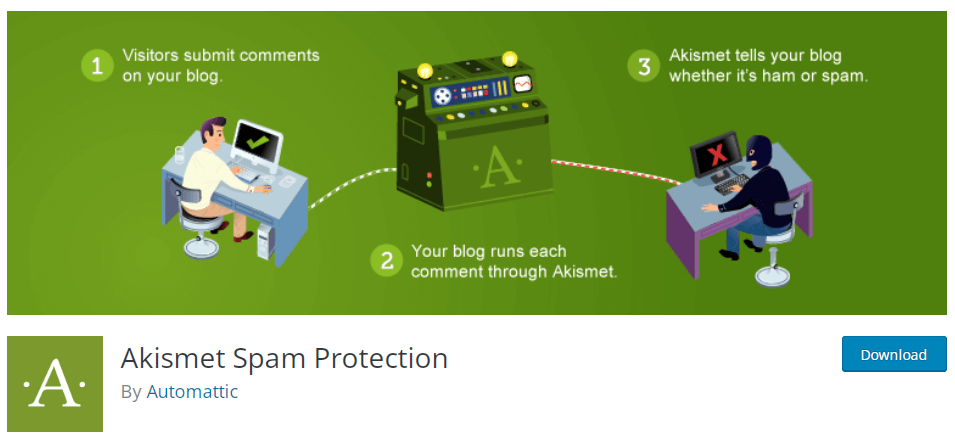
Akismet is a spam protection plugin created by Automattic developers. It is trusted by more than 5 million WordPress users and supports WordPress version 5.0 and higher. This plugin is very essential for every website to gain protection from spam. Akismet is an excellent website security plugin.
Top Features
- Akismet allows you to check all visitor’s comments and filter out the spam comments automatically.
- To reveal misleading and hidden links, Akismet shows URLs in the comment body.
- To help manage comments, it allows moderators to see the total number of approved comments.
- With the complete history of every comment, you can check which comments are filtered by Akismet and which are filtered by moderators.
Pricing
Akismet is free to use. You just need to sign up for Akismet and set up your account using the provided API.
3. UpdraftPlus
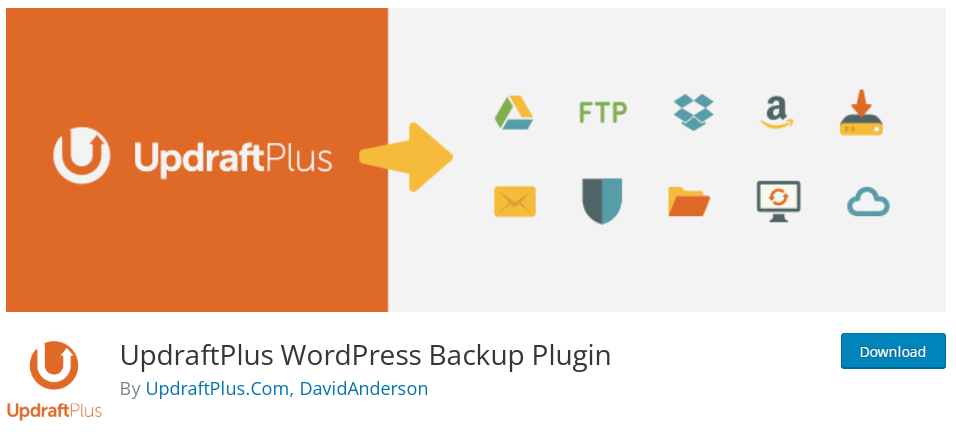
UpdraftPlus is a top-rated backup plugin for WordPress. If you want to backup WordPress blog, then look no further than UpdraftPlus. This plugin allows blog owners to backup databases and files with just one click. Further, this backup can be restored with just one click.
Top Features
- UpdraftPlus enables you to take a backup of the site directly to Google Drive, Dropbox, FTP, Email, Amazon S3, and UpdraftVault.
- You can perform both backup and restore operations on your WordPress blog using UpdraftPlus.
- For your convenience, this plugin allows you to schedule automatic backups.
- UpdraftPlus is one of the fastest WordPress backup service providers, with over 3 million trusted blogs.
Pricing
UpdraftPlus is available for free on WordPress but you can also purchase its paid version to get more premium features like additional backup locations like Microsoft OneDrive or multi-site support.
4. WP Super Cache
If you are looking to boost your website speed and performance, then WP Super Cache can help you. It is a caching plugin for WordPress that provides multiple optimization options to make your site fast.
Top Features
- WP Super Cache allows you to generate cache files of posts, pages, categories, and tags so that they can be served to visitors faster.
- This plugin also provides you with a CDN that is built into the plugin. By using it, you can serve content from the nearest servers to visitors.
- You can also enable page compressions to serve pages faster to visitors.
- It also allows you to exclude any specific number of pages from being cached.
Pricing
WP Super Cache is free to use.
5. WPForms
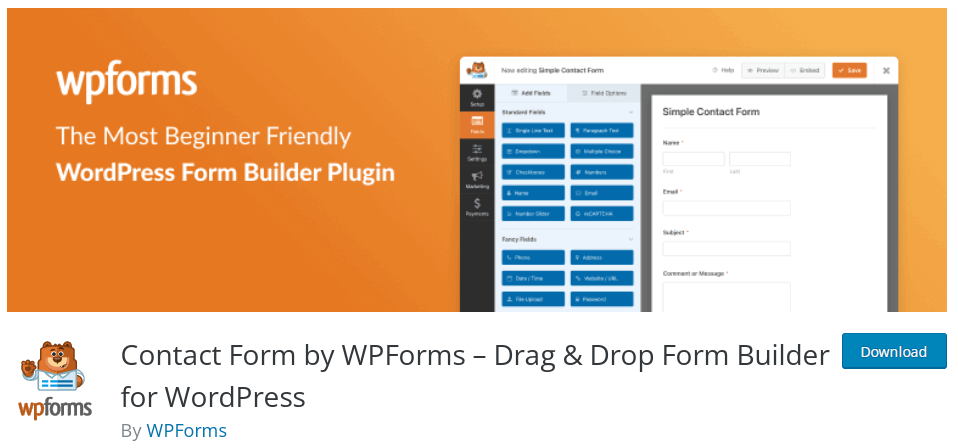
Forms are one of the key elements for every website. That’s why you need a form builder plugin for WordPress. WPForms is the most trusted plugin to create different types of forms on your site.
Top Features
- WPForms is a drag-and-drop form builder that allows you to create different forms like contact forms, payment forms, signup forms, feedback forms, and more.
- It also provides integrations to widely used page builders, including Gutenberg, Elementor, Classic Editor, and Divi.
- All the forms created using WPForms are fully mobile responsive and lightweight.
- WPForms offers more than 300 ready-to-use form templates. Moreover, you can also include any custom field you want in your form, like star ratings.
Pricing
WPForms is free to use the WordPress plugin.
6. Redirection

Redirection is one of the simplest and most essential plugins available on WordPress. Whether you are running a simple blog or a big ecommerce store, you definitely need this plugin on your site.
Top Features
- By using the Redirection plugin, you can track 404-page errors on the site and redirect them to other pages by adding a 301 redirection.
- From fewer redirects to thousands of redirects, Redirection can do all for you.
- You can also enable an automatic redirection feature that will create an automatic redirect whenever a post or page permalinks change.
- It also enables you to redirect pages only if a user is using a specific browser if the IP address matches.
Pricing
Redirection is free to use.
7. Smush
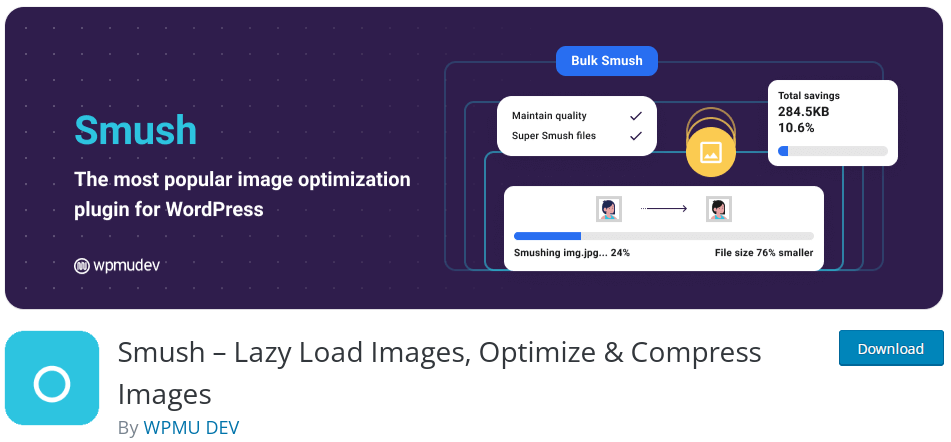
Smush is an image optimization plugin for WordPress. If you want to optimize images for SEO, then this plugin is a must for your blog. It is trusted by over 1 million WordPress blogs for optimizing images.
Top Features
- Smush provides a lazy loading feature that allows you to lazy load offscreen images.
- By using this plugin, you can bulk compress and optimize up to 50 images at once.
- Smush can also detect images that are slowing down your website and automatically optimize them. This is super useful if you are developing a membership website and have users upload their own photos.
- Smush supports almost every type of image file, including JPEG, PNG, and GIF.
- Whenever you upload any image in the WordPress library, Smush automatically compresses and optimizes it.
Pricing
Smush is free to use, but if you need more features like unlimited bulk image optimization, converting images to WebP, and more features, then you can buy Smush Pro at $5 per month.
8. AddToAny Share Buttons

Social media sharing of your content can drive more traffic to your website. But, to let visitors share your content over social media platforms, your site should have a social media sharing button. Here, the AddToAny Share Buttons plugin helps you.
Top Features
- AddToAny Share Buttons allow you to add multiple social sharing buttons, including Facebook, Twitter, LinkedIn, WhatsApp, Pinterest, Reddit, and 100 more platforms.
- You can choose from standard and floating sharing buttons. You can also choose whether to add sharing buttons vertically or horizontally.
- This plugin also allows you to add follow buttons for platforms including YouTube, Snapchat, Instagram, and Discord.
- You are also allowed to place social sharing buttons before, after, or both before and after content.
- AddToAny plugin displays share counts on every social media button.
Pricing
AddToAny Share Buttons plugin is free to use.
9. Discount Rules for WooCommerce

Discount Rules for WooCommerce are simple and an essential must-have plugin for your WooCommerce store. Need to provide various and personalized discounts based on discount rules for your customers? Then, this plugin allows you to create a bunch of WooCommerce discount rules with tons of features an easy-to-use interface and crafted to increase your sales conversions.
Top Features
- Discount Rules for WooCommerce aid you in creating bulk discounts, dynamic pricing, advanced discounts, product-based discounts, tiered discounts, and more.
- This plugin comes up with more conversion-focused features like a Discount table on the product page, a Sale Badge for discounted products, and Exclude products on Sale.
- Woo Discount Rules is compatible with WPML, where you can easily create discount rules in various languages.
- Apart from setting up discounts, Woo Discount rules allow you to provide additional conditions to your rule based on subtotal, purchase history, category combination, specific user role, and more.
Pricing
The Free version of Discount Rules for WooCommerce is available in WordPress. Get our paid version and provide comprehensive discounts with premium features like Category-specific discounts, Dependent product-based discounts, Bundle/package deals, and more discount features.
10. FluentCRM
FluentCRM is a self-hosted CRM plugin that can also help you with your email marketing automation. The unique and helpful features of FluentCRM have made it the go-to solution for over 20 thousand businesses in no time.
You can do everything from maintaining a large database to running email marketing campaigns with this WordPress plugin. This CRM provides insights about every individual in your list, which helps you segment them according to their actions, behavior, and previous interactions. Not to mention, you can create automation funnels to take the stress off your shoulders.
Top Features
- Easy to run and manage unlimited email marketing campaigns.
- Very precise and advanced features for segmenting your contacts based on several aspects. You can even use conditional logic to filter your audiences based on conditional logic.
- The email sequencing feature makes it easy for you to send repetitive emails. You can also create an automation funnel to set up everything on autopilot.
- This CRM software lets you track every user’s activity and provides you with granular reports to make data-driven decisions.
- A/B testing of subject lines is also possible.
- Seamless integration with 30+ useful plugins like WooCommerce, LearnDash, Easy Digital Downloads, LifterLMS, MemberPress, etc.
Pricing
FluentCRM is free to start with, and most features are available in the free version. But if someone wants to get the most out of FluenCRM, the paid plans start from $129/Year.
11. WP-Optimize

WP-Optimize is an all-in-one WordPress performance plugin that helps clean your database, compress images, and cache your site. It’s a powerful tool that keeps your WordPress site running smoothly and efficiently.
Top Features:
- WP-Optimize automatically cleans your WordPress database by removing unnecessary data like trashed posts, spam comments, and expired transients.
- It offers image compression capabilities to reduce the size of your images without compromising quality.
- The plugin includes a powerful caching system that helps speed up your website.
- It provides database optimization features that help reduce bloat and improve site performance.
- You can schedule automatic cleanups to maintain optimal site performance without manual intervention.
- The plugin offers multisite support for WordPress networks
Pricing
WP-Optimize offers a free version with basic features. The premium version starts from $49 per year and includes advanced features like multisite support, image compression, and premium caching options.
Conclusion
We hope this article has helped you find some useful WordPress plugins for your website. There are many options out there, including WooCommerce plugins that can make your site more secure, increase conversion, protect your content, and boost your search engine rankings. Give these a try, and let us know how they work for you!
If you want to learn more about plugins or other WordPress topics, please feel free to contact us anytime. Thanks for reading!




Your post indeed was a game changer for me. I found the plugin recommendations just perfect, especially FluentCRM and Yoast SEO. Now managing my blog has become so convenient. Thanks a lot! Keep sharing such useful information.